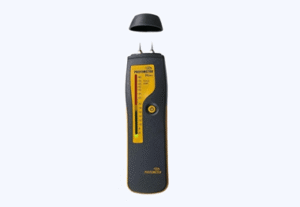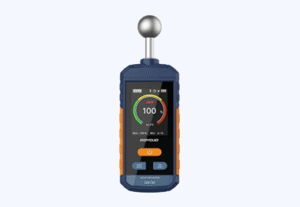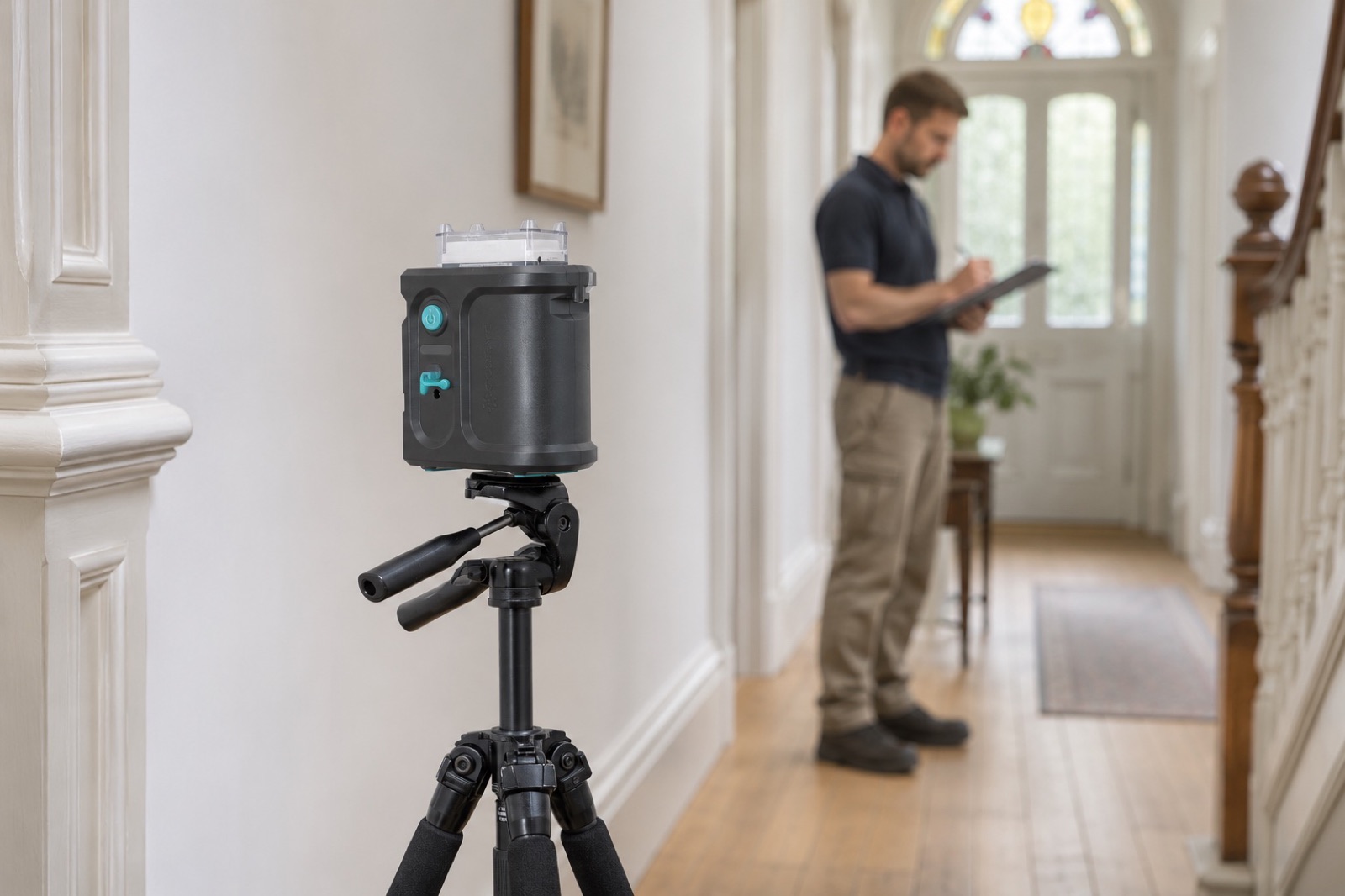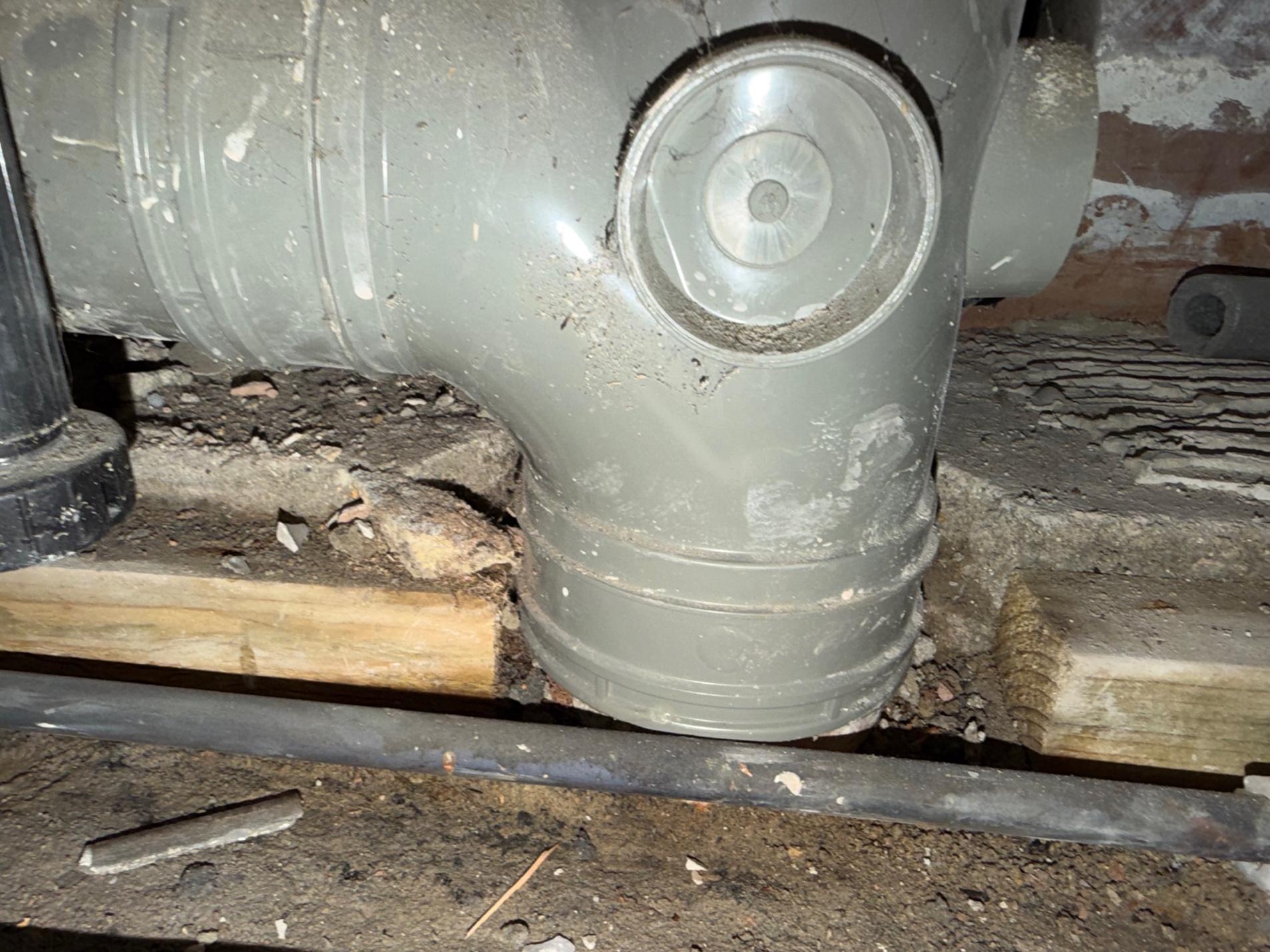
A Level 3 damp survey was commissioned for a residential house in Thames Ditton (KT7) to establish the cause of kitchen floor moisture. The property owner instructed an independent specialist to obtain an authoritative, evidence-based health check. The inspection covered the exposed concrete subfloor, pipe trenching and external elevations.
About the Issue
The property owner grew concerned after discovering elevated damp readings on the concrete floor surrounding a pipe trench in the kitchen. They sought expert advice to confirm whether a plumbing leak or a failed subfloor membrane was responsible before hiring contractors.
The Challenge
The diagnostic process evaluated concrete moisture profiles, pipe trench positioning and external ground heights.
The survey revealed clear factual evidence:
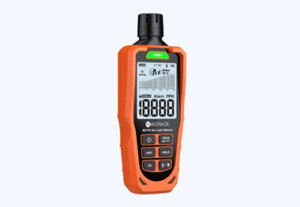
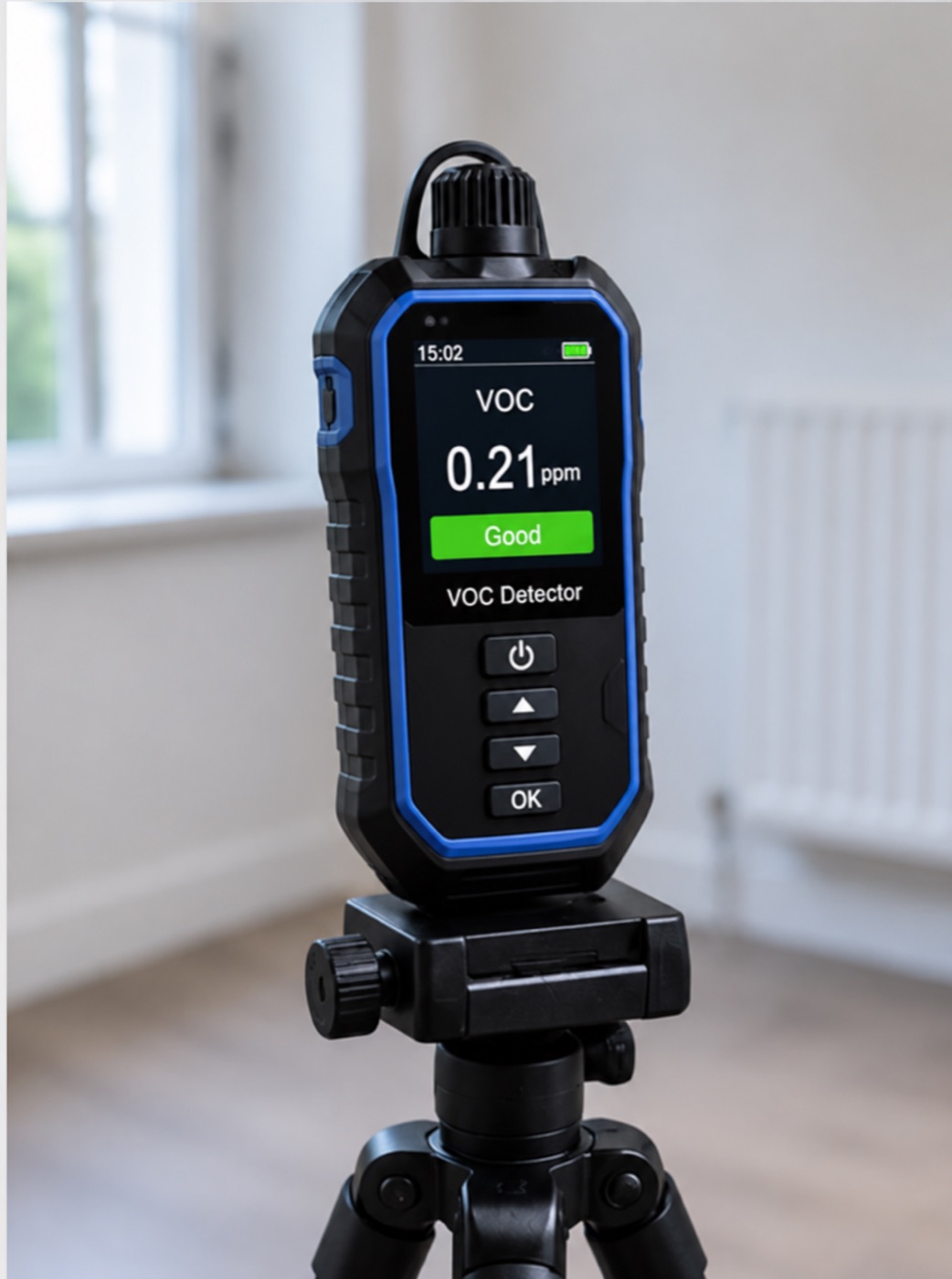
- Quantitative testing recorded peak moisture readings along the side of the trench closest to the kitchen units.
- External checks confirmed ground levels were sound, ruling out external groundwater bridging into the floor construction.
- Potential causes were narrowed to a pipework leak within the trench or moisture rising through the slab due to an ineffective damp-proof membrane (DPM).
- Diagnostic reasoning proved that pressure leak testing must be completed first, as applying DPM coatings over an active plumbing leak will fail.
The report provided three clear treatment options if ground moisture rise is confirmed after plumbing checks.
The Solution
To permanently resolve active moisture issues, the report advised:
- Step 1 – Plumbing Verification: Instruct a plumber to conduct pressure testing and tracer gas leak detection on trench pipework. If a leak is repaired, allow one month of natural drying before re-testing with a damp meter.
- Step 2 (Option 1 – Full Subfloor Excavation): Remove units, excavate the slab, install a new plastic DPM underneath a new concrete floor and reinstall finishes.
- Step 2 (Option 2 – Full Surface Liquid DPM): Remove units and tiles, prepare the slab and apply a liquid DPM across the entire kitchen floor surface.
- Step 2 (Option 3 – Trench Liquid DPM): Apply a liquid DPM strictly to the exposed trench concrete before re-tiling as a localised fix.
The Outcome
The independent survey provided total clarity, reassuring the homeowner that external walls and ground heights were healthy. By identifying plumbing leak testing as the essential first step, the report saved the owner from premature, expensive subfloor excavation.
Why This Case Matters
Unbiased damp diagnostics look beyond surface moisture to establish logical repair sequences. Verifying pipe integrity before choosing between full-slab and localised liquid DPM treatments ensures property owners spend capital effectively.