Level 3 Kitchen Floor Damp Survey in Thames Ditton (KT7)

Back to all Case Studies
Level 3 Kitchen Floor Damp Survey in Thames Ditton (KT7)

An independent Level 3 damp survey was commissioned for a residential property in Thames Ditton (KT7). The property owner instructed the specialist investigation after discovering localised moisture along an exposed concrete trench within the kitchen floor. Commissioning an unbiased diagnostic assessment ensured the owner received an evidence-based roadmap, avoiding unnecessary floor excavation before essential plumbing diagnostics were performed.

About the Issue

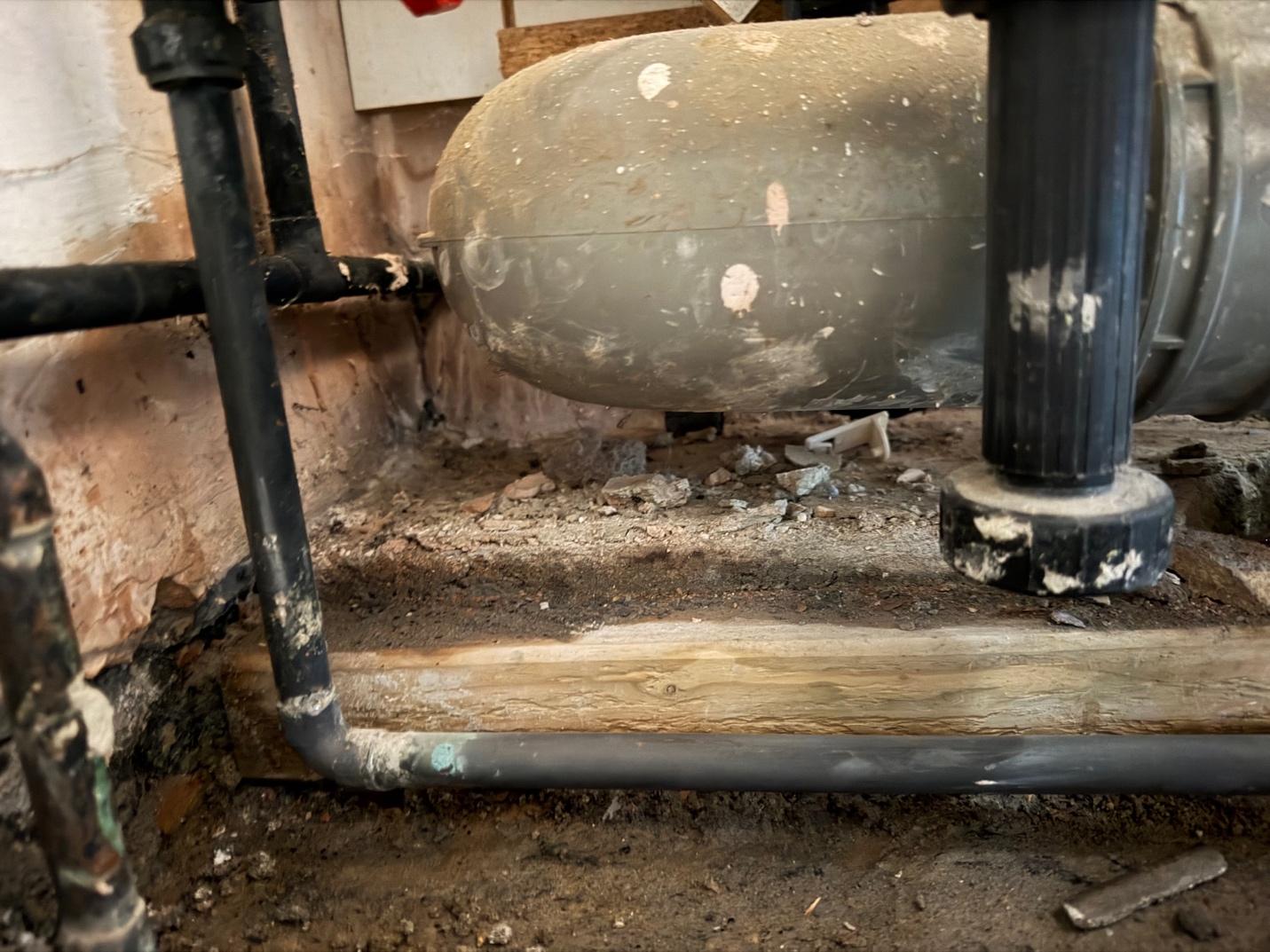
The homeowner noticed dampness affecting the concrete floor in the kitchen, specifically concentrated around an open floor trench containing concealed pipework that serves the kitchen units. Concerned that ground moisture was saturating the entire subfloor or that external groundwater was bridging into the house, they requested a professional assessment to identify the true cause and evaluate remedial options.

The Challenge

Executing a complete Level 3 damp survey required inspecting the exposed concrete trench, measuring moisture gradients across surrounding floor finishes, evaluating adjacent kitchen cabinetry and checking external ground levels. The primary diagnostic goal was to determine whether the floor moisture stemmed from external lateral penetration, an active plumbing leak, or subfloor damp-proof membrane (DPM) failure.

Systematic testing and physical inspection gathered clear factual evidence:

  • Moisture meter testing confirmed that dampness was highest along the side of the trench closest to the kitchen units rather than being evenly distributed across the entire floor slab.
  • External inspection verified that surrounding ground levels were well below internal floor heights and not bridging the damp-proof course (DPC) or transferring groundwater into the slab.
  • All other potential moisture pathways were evaluated and ruled out based on physical evidence.
  • The diagnostic findings narrowed the root cause down to two distinct possibilities: an active or intermittent pipework leak within the floor trench, or ground moisture rising through the concrete due to a missing, damaged, or compromised subfloor damp-proof membrane (DPM).

The diagnostic reasoning established that performing damp-proofing treatments before verifying pipe integrity would fail if a leak was actively releasing water into the concrete.

The Solution

The report detailed a strict, sequential two-stage action plan prioritising leak detection before any floor damp-proofing:

  • Stage 1 – Plumbing Leak Investigation: Instruct a competent plumber to perform pressure testing and tracer gas leak detection on the pipework inside the trench. If a leak is found, repair the pipework immediately and allow the floor to dry naturally for approximately one month before re-testing with a damp meter.
  • Stage 2 – Subfloor Damp-Proofing Options (if no pipe leak is found):
  • Option 1 (Full Floor Replacement): Remove kitchen units and tiles, excavate the concrete floor, install a new plastic damp-proof membrane beneath a new concrete slab and reinstall finishes. This offers the most complete long-term barrier but causes maximum disruption.
  • Option 2 (Full Surface Liquid DPM): Remove kitchen units and tiles, prepare the concrete surface and apply a liquid damp-proof membrane across the entire kitchen floor slab before refitting tiles and units. This provides comprehensive surface protection with moderate disruption.
  • Option 3 (Localised Trench Treatment): Apply a liquid damp-proof membrane strictly to the currently exposed concrete in the trench area before tiling. This is the fastest and least disruptive repair, though it carries a higher risk of moisture returning in adjacent untreated slab sections.

The Outcome

The property owner gained total diagnostic clarity, discovering that external ground levels were completely sound and their walls were unaffected. By choosing an independent survey, they avoided committing to costly floor excavation until pressure leak testing confirms whether an active plumbing fault is responsible.

Why This Case Matters

High moisture readings along floor pipe trenches frequently lead homeowners to assume their concrete slab has failed completely. Independent diagnostic surveys mandate pressure testing and tracer gas detection first, ensuring property owners do not install expensive damp-proofing membranes over an active, concealed plumbing leak.

FAQ s
Why must pipe leak detection be completed before floor damp-proofing?

If a concealed pipe is leaking, applying a damp-proof membrane will trap escaping water inside the floor structure, causing moisture to migrate sideways and reappear elsewhere.

How does tracer gas leak detection work on concealed floor pipes?

Tracer gas leak detection introduces a harmless gas mixture into sealed pipework, using specialised detectors above the floor to locate minute gas escapes from hidden leaks without breaking up concrete.

How long should the floor dry after a plumbing repair before re-testing?

The concrete floor should be allowed to dry naturally for approximately one month post-repair before re-testing with a damp meter to confirm moisture levels are dropping.

Ensure your property receives an honest, evidence-based assessment before undertaking building repairs.

Equipment Used During Our Surveys

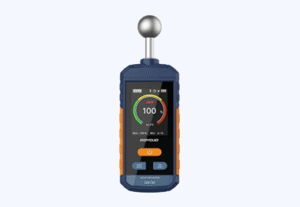
Professional Moisture Meter

Equipment Used During Our Surveys

Purpose:

Takes comparative moisture readings from walls, ceilings, floors and timber to identify abnormal moisture patterns.

Common Uses / Notes:

Used when investigating rising damp, penetrating damp, condensation and leaks. Readings support the survey but are not a diagnosis on their own.

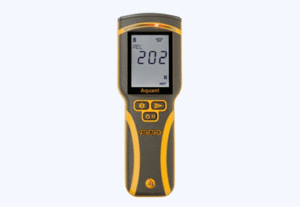
Subsurface Moisture Meter

Subsurface Moisture Meter

Purpose:

Detects moisture beneath the surface of suitable building materials.

Common Uses / Notes:

Helps determine whether moisture is confined to surface finishes or extends into the building fabric.

Non-Damaging Moisture Scanner

Non-Damaging Moisture Scanner

Purpose:

Scans surfaces for hidden moisture without causing damage.

Common Uses / Notes:

Ideal for decorated walls, ceilings and flooring where pin testing would be undesirable.

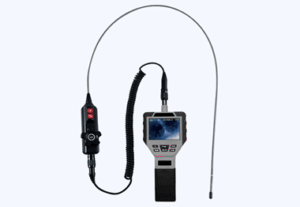
High-Resolution Borescope Camera

High-Resolution Borescope Camera

Purpose:

Inspects hidden or difficult-to-access areas without opening up large sections of the building.

Common Uses / Notes:

Used beneath floors, inside cavities, behind walls and around pipework to identify damp, leaks, decay and concealed defects.

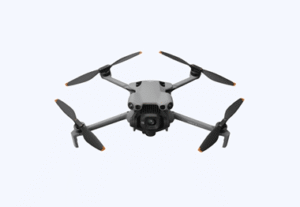
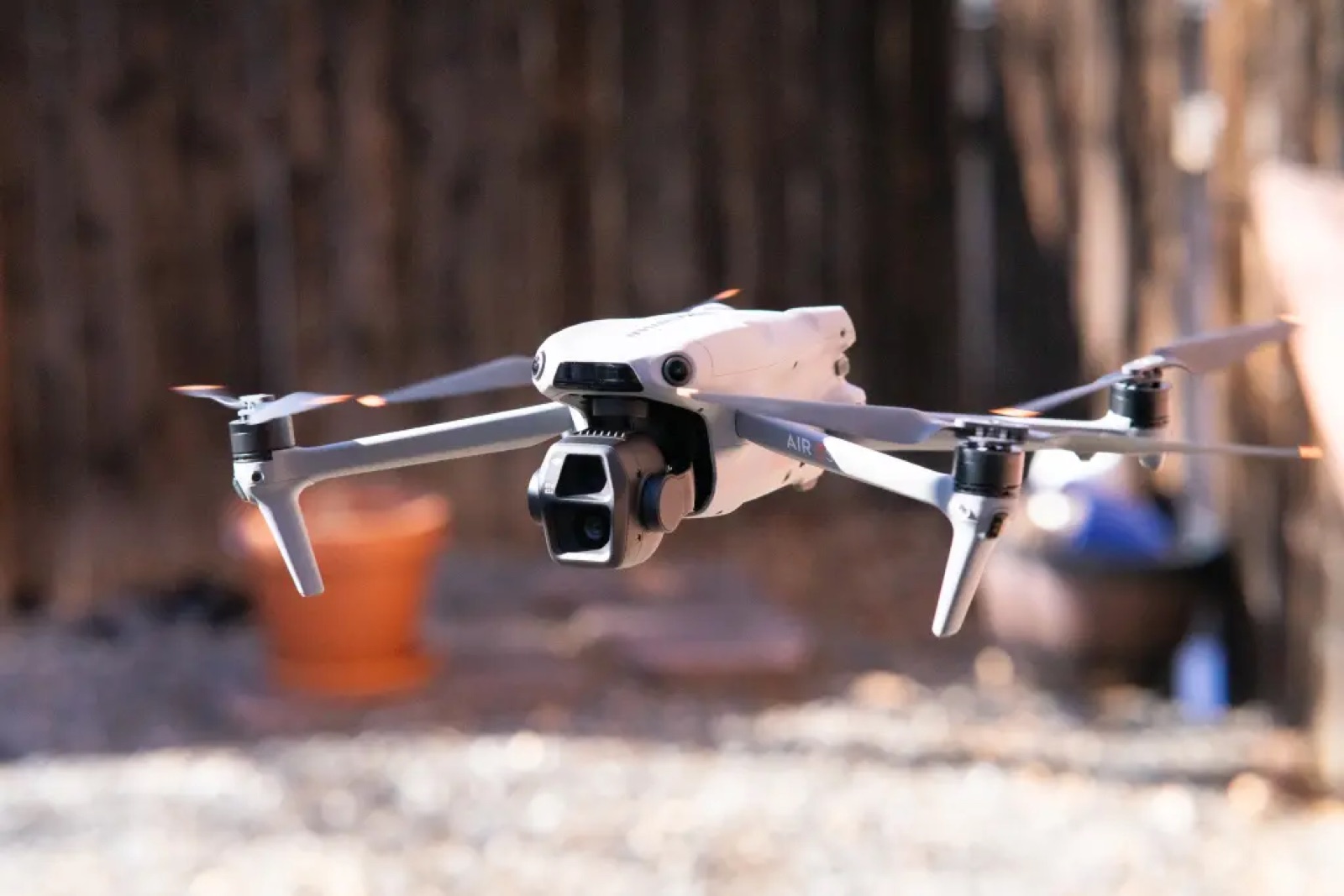
4K Aerial Inspection Drone

4K Aerial Inspection Drone

Purpose:

Captures high-resolution images of roofs and other inaccessible external areas.

Common Uses / Notes:

Inspects roof coverings, chimneys, flashing, gutters, valleys, parapets and high-level masonry. Subject to weather, safety requirements and flight regulations.

Atmospheric Humidity Sensor

Atmospheric Humidity Sensor

Purpose:

Measures indoor relative humidity levels.

Common Uses / Notes:

Helps assess condensation and mould risk alongside temperature, ventilation, heating patterns and room usage.

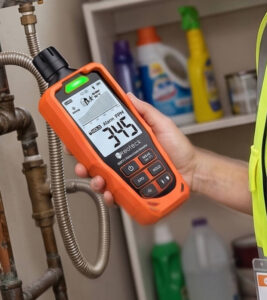
Handheld gas and vapour detector being used beside pipework in an under-sink cupboard

Gas Detection Monitor

Purpose:

Screens for certain airborne gases where unusual odours are present.

Common Uses / Notes:

May detect gases associated with drainage, combustion or flammable substances. Does not replace inspection by a Gas Safe registered engineer where gas appliances or pipework are involved.

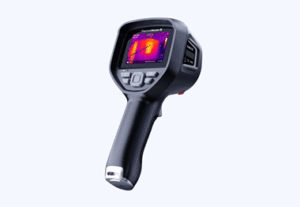
Thermal Imaging System

Thermal Imaging System

Purpose:

Identifies temperature differences across building surfaces.

Common Uses / Notes:

Helps locate cold spots, thermal bridging, insulation defects and areas associated with concealed moisture. Results always require further investigation to confirm the cause.

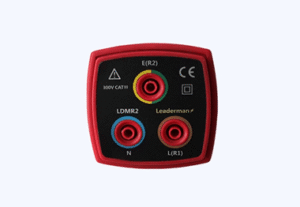
Basic Socket and RCD Tester

Basic Socket and RCD Tester

Purpose:

Performs limited electrical checks during comprehensive surveys.

Common Uses / Notes:

Can identify basic socket wiring issues, AC voltage and RCD operation. It is not an Electrical Installation Condition Report (EICR).

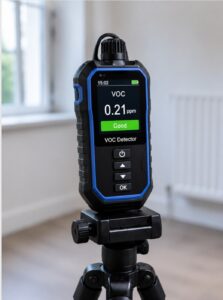
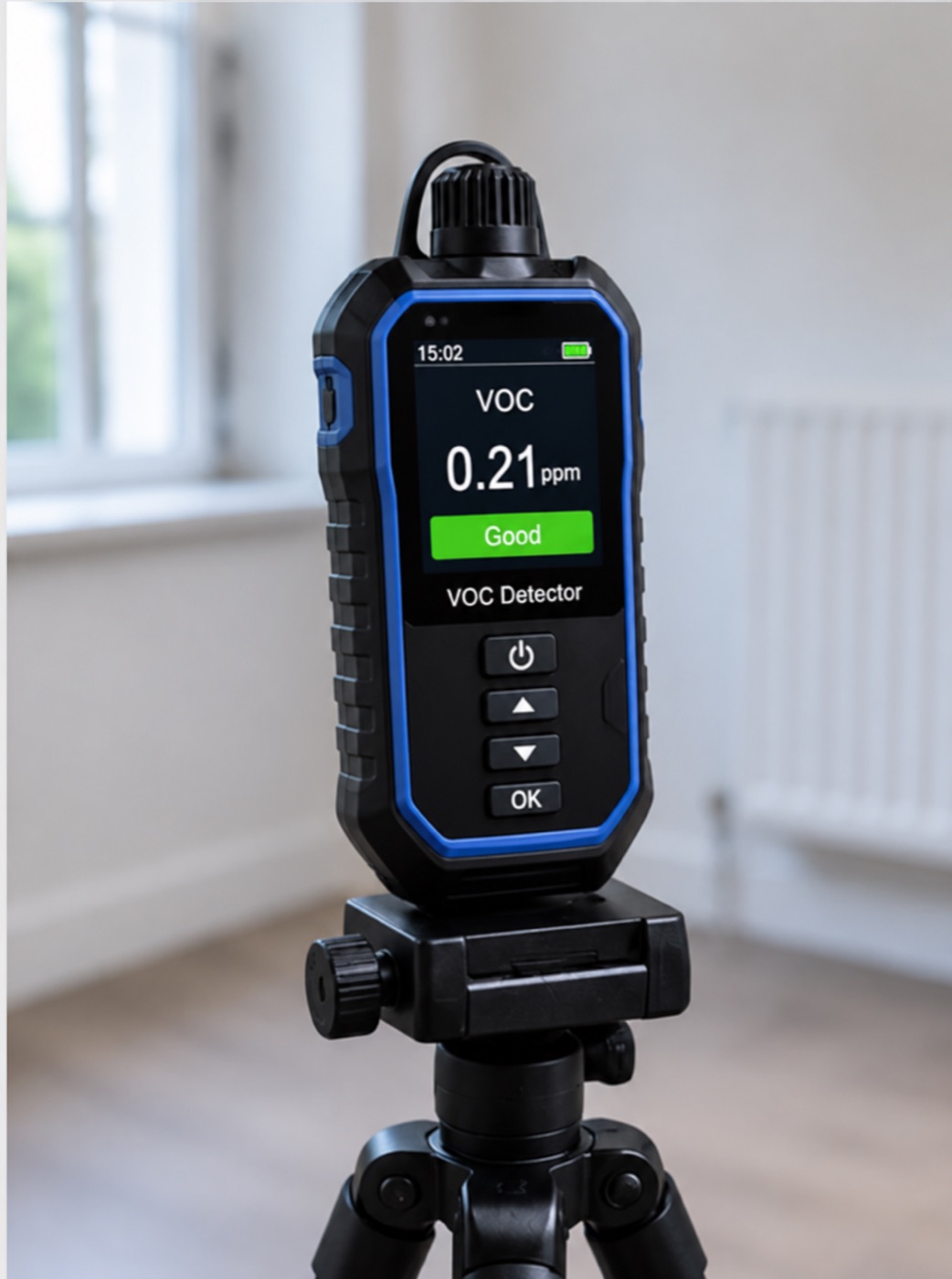
Handheld VOC detector on a tripod displaying a volatile organic compound reading

Chemical Vapour Testing Device

Purpose:

Screens for airborne volatile organic compounds (VOCs) and formaldehyde.

Common Uses / Notes:

Used where chemical odours, emissions from materials or indoor air-quality concerns are suspected after leaks or refurbishment.

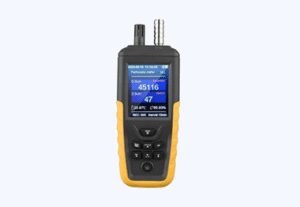
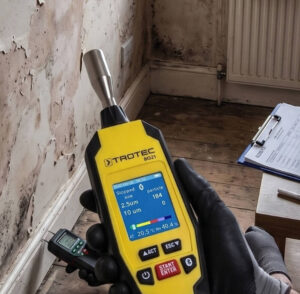
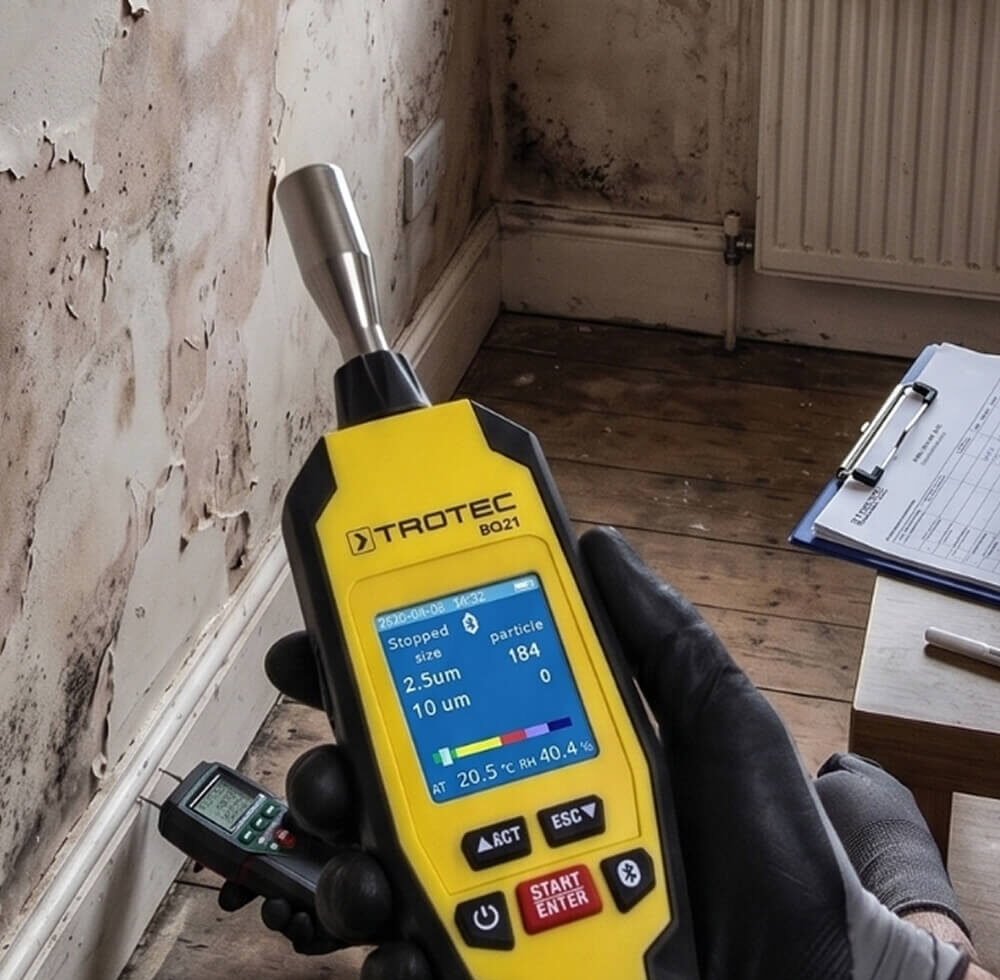
Surveyor taking an airborne particle reading against a damp, mould-affected wall

Fine Air Particle Counter

Purpose:

Measures airborne particulate matter (PM1.0, PM2.5 and PM10)

Common Uses / Notes:

Assists with investigations involving dust, smoke, mould concerns, post-construction contamination and indoor air quality following water damage.

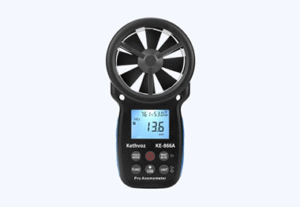
Extraction and Air-Movement Tester

Extraction and Air-Movement Tester

Purpose:

Measures the performance of extractor fans and mechanical ventilation systems.

Common Uses / Notes:

Used in kitchens, bathrooms and utility rooms to identify poor ventilation that may contribute to condensation and mould growth.

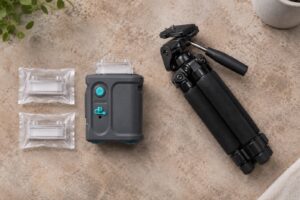
Air sampling pump, folded tripod and sealed spore trap cassettes laid out on a worktop

Air Sampling Pump

Purpose:

Collects airborne mould spore samples from indoor air for independent laboratory testing.

Common Uses / Notes:

Used when airborne mould contamination is suspected without visible growth, alongside outdoor baseline samples for comparison.

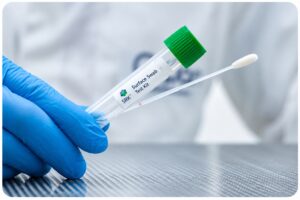
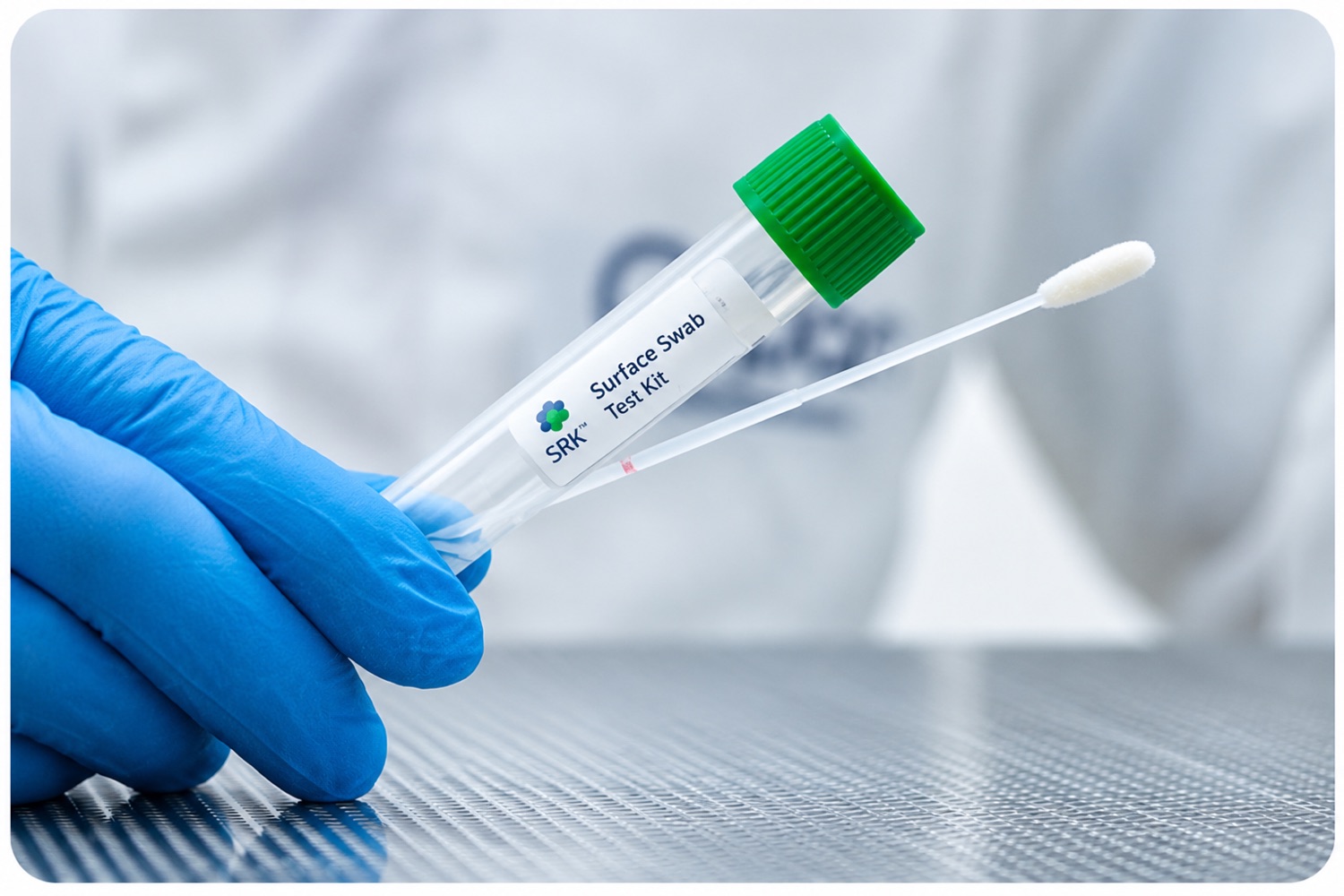
Gloved hand holding a surface swab test kit ready for laboratory analysis

Laboratory Swab Sampling Kit

Purpose:

Collects sterile surface samples for off-site laboratory testing.

Common Uses / Notes:

Used to identify specific mould species via qPCR DNA analysis or verify biological and bacterial residues on surfaces.

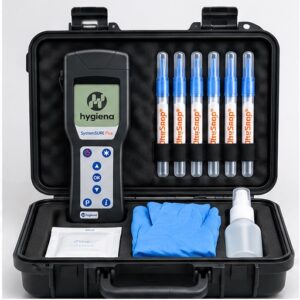
ATP testing meter, swabs and sampling kit laid out in its carry case

ATP Testing Meter

Purpose:

Measures adenosine triphosphate (ATP) on surfaces to screen for active organic and biological matter.

Common Uses / Notes:

Provides rapid on-site hygiene readings before and after cleaning. Does not identify specific bacteria or mould species.

Survey Levels and Equipment Provided

Select Your Survey

Level 1

Basic Moisture Survey

Standard price: £299 + VAT

Special offer: £199 + VAT until the end of this week

Offer ends in--Days--Hours--Mins--Secs

The Level 1 survey provides a basic assessment of the main accessible internal surfaces. It is most appropriate for simple, localised damp concerns where advanced testing is not required.

Equipment Included

  • Professional damp meter

Survey Checks

  • Accessible walls
  • Accessible floors
  • Ceilings
  • Visible plumbing and drainage leak inspection
  • Damp-control and prevention information

Suitable For

This survey is suitable for a customer who has found an isolated damp patch, suspects rising damp in a limited area or wants a straightforward check of the property’s accessible surfaces.
Only a standard damp meter is included. Customers requiring deep moisture detection, timber inspection, thermal imaging or roof inspection should select a higher survey level.

The survey fee will be deducted if we carry out the recommended work.

Click Here To Check Availability And Book Now ❯
Level 2

Damp, Moisture and Timber Survey

Standard price: £399 + VAT

Special offer: £299 + VAT until the end of this week

Offer ends in--Days--Hours--Mins--Secs

Level 2 includes everything in the Level 1 inspection and adds deeper moisture detection, non-invasive scanning and timber assessment.

Equipment Included

  • Professional damp meter
  • Deep-reading moisture meter
  • Non-invasive moisture scanner

Survey Checks

  • Accessible walls, floors and ceilings
  • Visible plumbing and drainage leak checks
  • Subsurface moisture readings
  • Non-invasive scanning of appropriate materials
  • Accessible underfloor and subfloor checks
  • Wet rot inspection
  • Dry rot inspection
  • Woodworm inspection
  • Damp prevention information

Suitable For

This level is intended for customers who require a more detailed inspection of dampness and timber condition. It is appropriate when moisture may be concealed within building materials or beneath accessible flooring.

The survey may identify evidence of timber decay or wood-boring insects and assess moisture in locations that cannot be properly examined with a surface meter alone.
Level 2 is particularly useful for homebuyers and sellers who want more information about damp and timber before completing a transaction.

The amount paid for the survey will be deducted from repairs undertaken by us.

Click Here To Check Availability And Book Now ❯

Specialist Survey Add-On Services

For complex damp investigations, we offer six specialised laboratory and environmental testing add-ons:

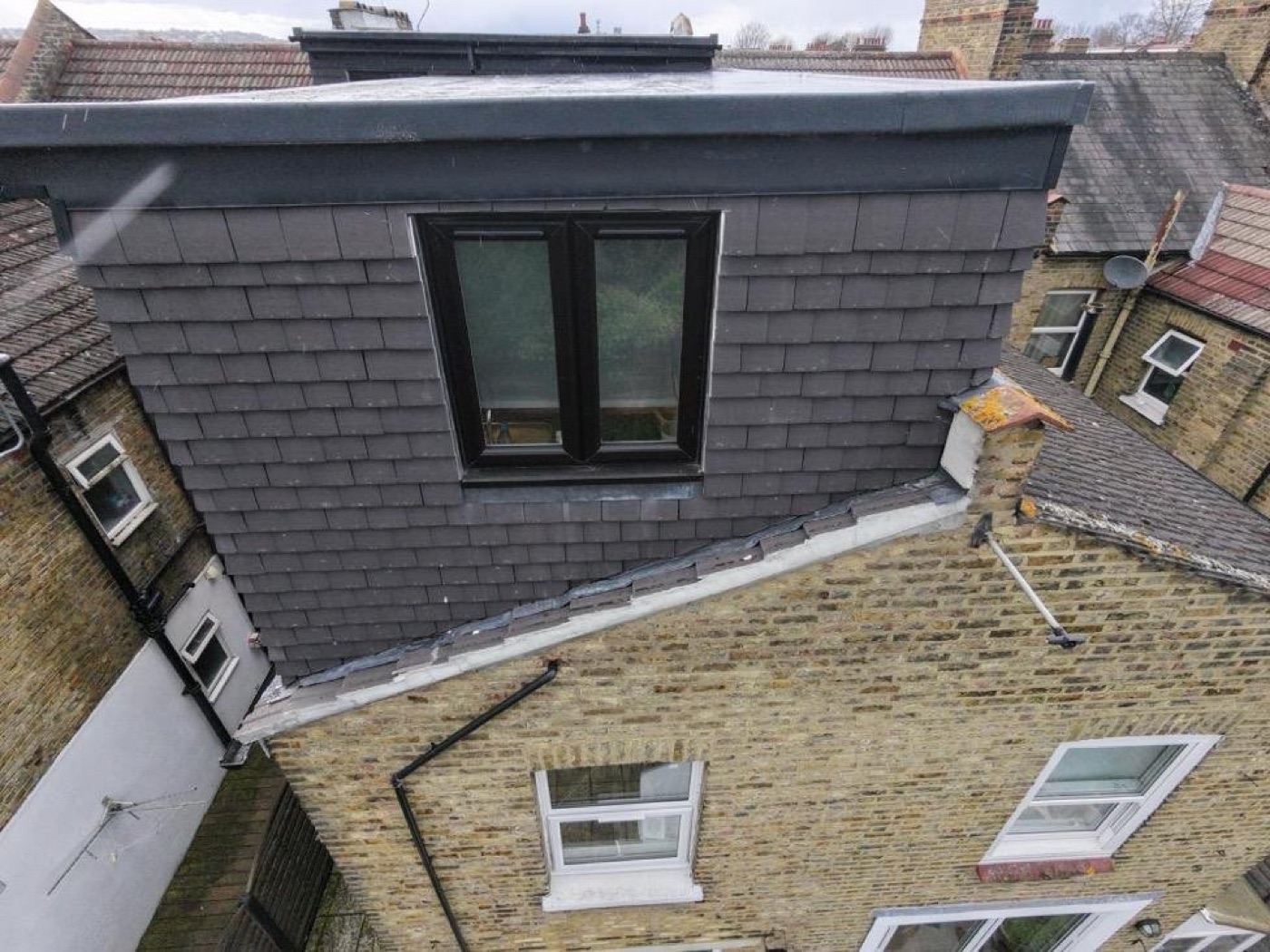
Survey drone in flight photographing a roof during an aerial roof inspection Aerial drone view of a London slate dormer roof showing flashing, leadwork and brickwork
Add-On Service 1

4K Drone Roof Survey

Price £199 + VAT

Description: A detailed aerial roof survey using high-resolution 4K drone imagery to inspect roof coverings, chimney stacks, guttering and other external roof features. The survey provides clear photographic and video evidence of visible defects, damage, deterioration and potential maintenance issues, including areas that are difficult or unsafe to access from ground level.

Value: Findings are documented with supporting imagery, helping identify visible problems and assess the external condition of the roof and associated structures without the need for direct physical access or costly scaffolding. This ensures external defects causing water ingress and penetrating damp are accurately pinpointed.

This service can be beneficial when:

  • Roof coverings, chimney stacks, flashings, or parapets cannot be safely viewed from ground level.
  • High-level penetrating damp, ceiling staining, or chimney damp is present inside the property.
  • Guttering, valleys, or rainwater goods are suspected of overflowing or leaking into masonry.
  • Purchasing or maintaining a multi-storey or period property with complex roof structures.
  • Clear photographic and video evidence of external defects is required before carrying out repairs.
Click Here To Check Availability And Book Now ❯ View Full Details ❯
Gloved hand holding a surface swab test kit ready for laboratory analysis
Add-On Service 2

Mould Identification & qPCR DNA Testing

Price £299 + VAT

Description:  Surface swab samples are collected and sent to an accredited laboratory for advanced qPCR DNA analysis. Identifies exact mould species, measures spore concentrations and detects hidden fungal growth behind furniture, within void spaces, or under floorboards.

Value: Provides precise scientific data regarding mould toxicity and contamination levels, helping establish the exact scale of cleaning, drying and structural remediation needed.

Laboratory mould testing may be useful when:

  • There is an unexplained musty odour.
  • Visible mould repeatedly returns.
  • Water damage occurred previously.
  • Mould is suspected behind cupboards or furniture.
  • Contamination may be present in a concealed location.
  • The visible extent of growth is uncertain.
  • Independent results are needed.
  • Remediation work is being planned.

Note: The results can provide a clearer indication of whether contamination appears minor, concentrated or potentially widespread. This information may be used when deciding the scale of cleaning, removal, drying or remedial work required. Testing should be combined with an investigation of the moisture source. Removing visible mould without resolving the underlying condensation, leak or ventilation problem may allow it to return. Survey fee credited against subsequent remediation works completed by us.

Click Here To Check Availability And Book Now ❯ View Full Details ❯
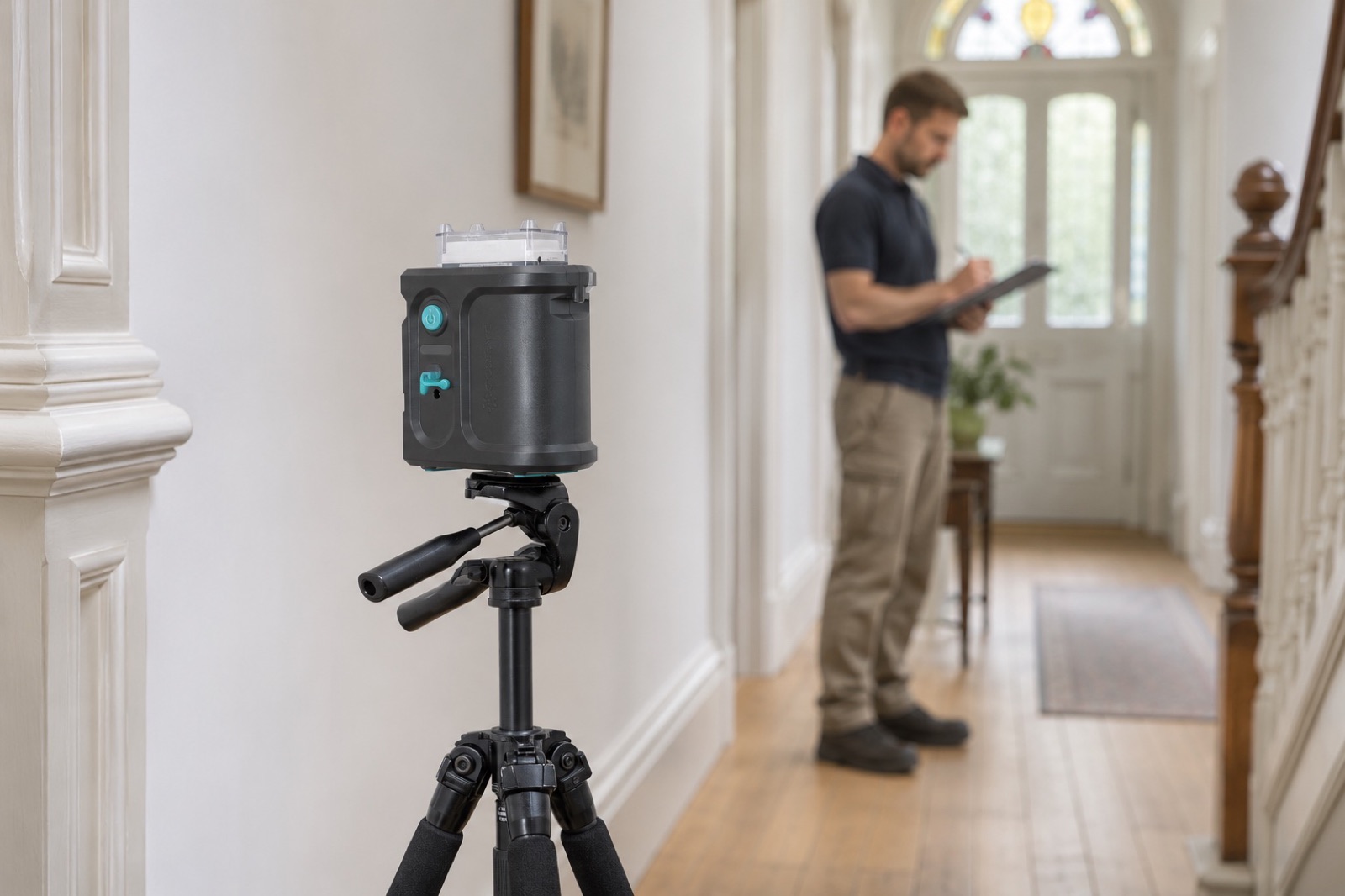
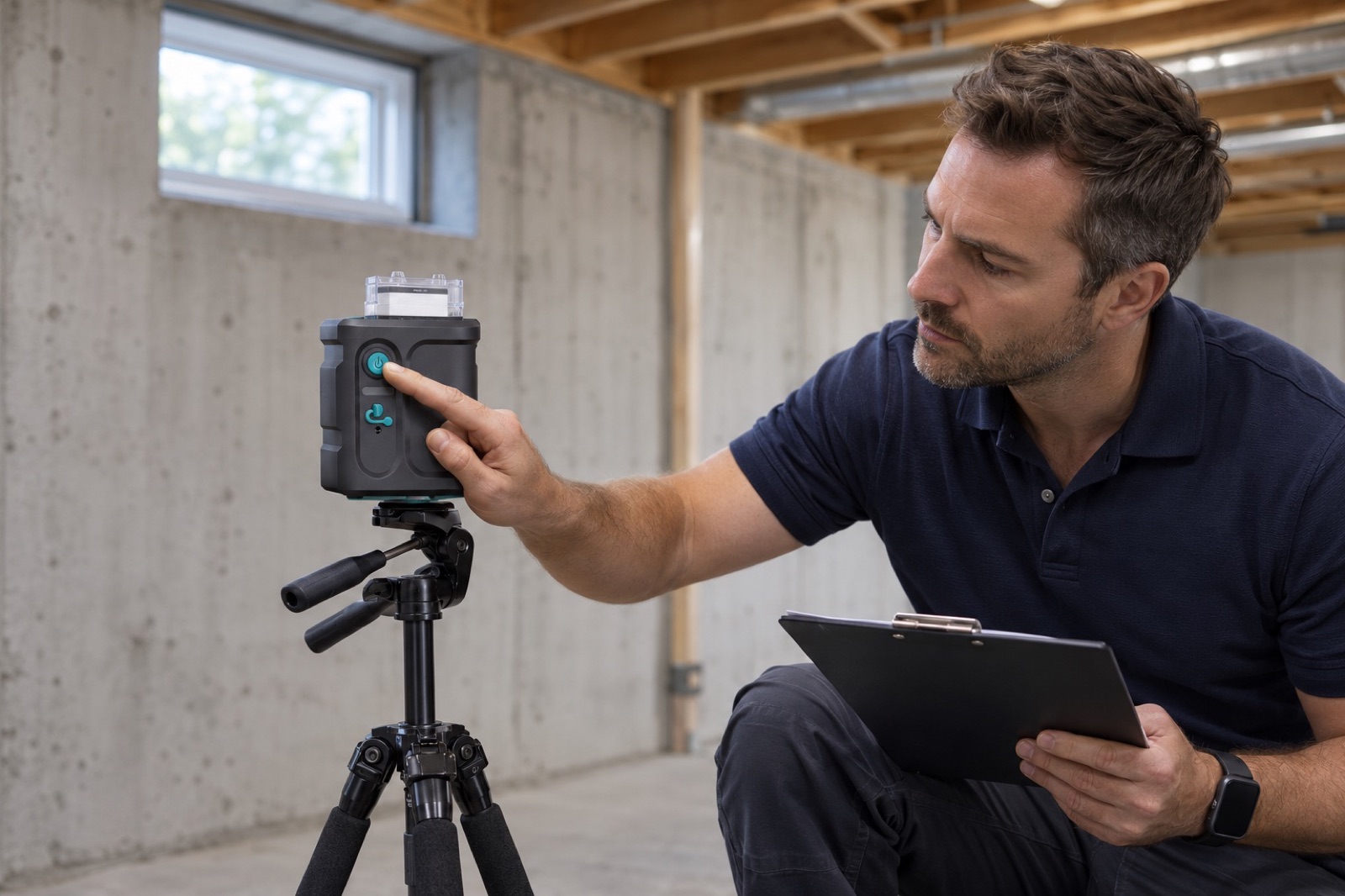
Air sampling pump on a tripod during a mould air quality survey in a period London hallway Surveyor starting an air sampling pump during a basement mould inspection
Add-On Service 3

Mould Air Quality Testing (Air Pump Test)

Price £299 + VAT

Description: This test uses a specialist air-sampling pump to collect airborne mould spores from inside a property, with outdoor air sampling where appropriate for comparison. Samples are sent to an accredited laboratory to assess airborne mould spore concentrations and identify mould types where the analysis allows.

Value: Unlike a surface swab test, which checks for mould DNA on a specific surface, air sampling investigates mould spores circulating in the air, including where visible mould growth may not be present. This test helps investigate suspected airborne mould contamination and supports damp and mould assessments so that appropriate remedial action can be determined.

This service can be beneficial when:

  • Suspected airborne mould contamination is present without obvious visual signs.
  • Occupants experience persistent musty odours or unexplained respiratory irritation.
  • Recurrent condensation, poor ventilation, or high humidity issues are suspected.
  • Verification of indoor air quality is needed following a leak or water ingress.
  • Confirmation is required on circulating spore levels before or after remedial works.

Note: Air mould sampling assesses active airborne spores at the time of testing. Results are analysed alongside external baseline samples, structural moisture readings, ventilation performance and visible property conditions. Survey fee credited when repairs are completed by us.

Click Here To Check Availability And Book Now ❯ View Full Details ❯
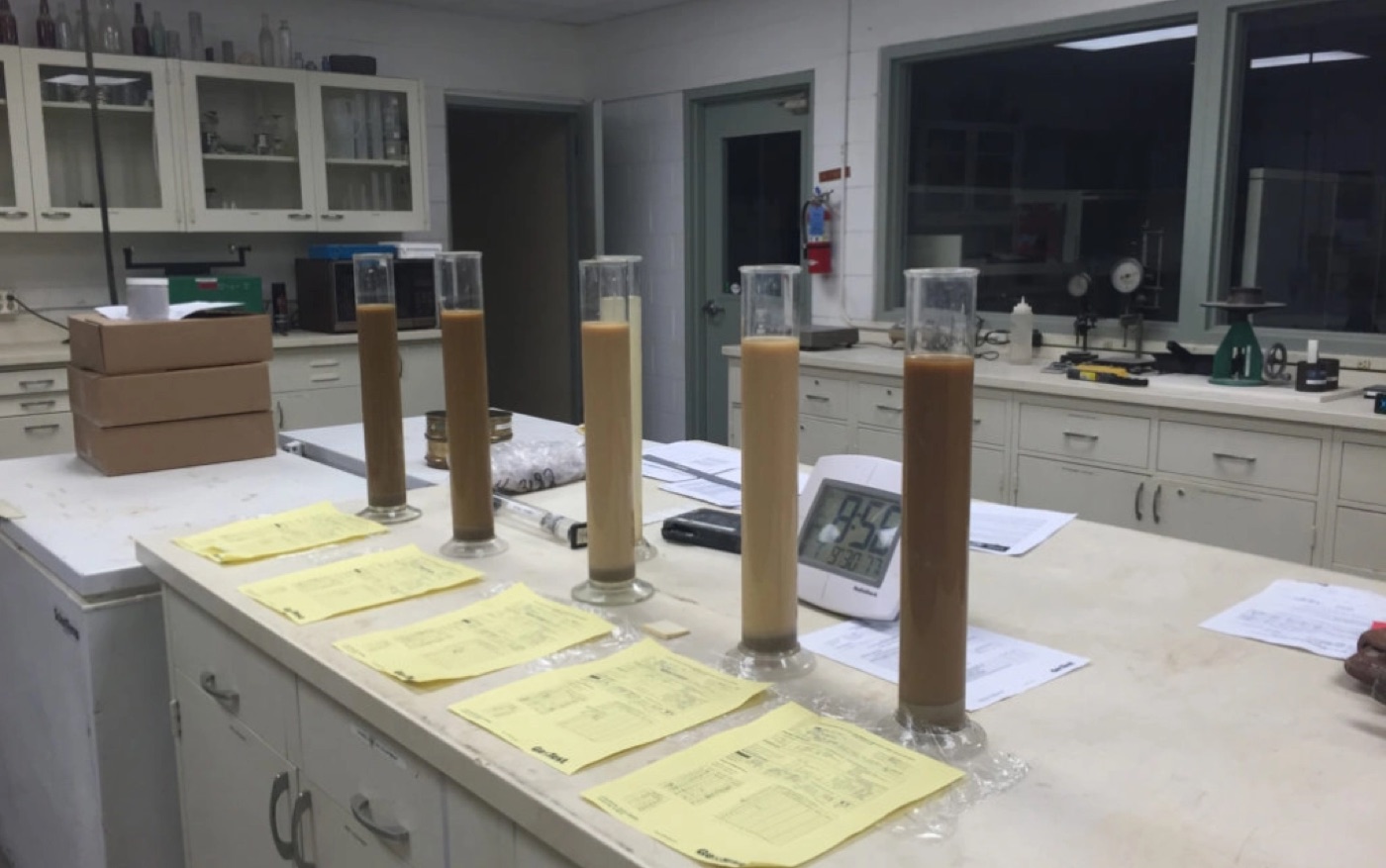
Plaster sample sedimentation cylinders and test sheets on a laboratory bench
Add-On Service 4

Laboratory Analysis of Plaster Samples

Price £299 + VAT

Description: Small plaster samples are extracted from affected masonry walls and submitted to an independent testing laboratory. The lab analyses the sample for hygroscopic salts (specifically nitrates and chlorides).

Value: Scientifically differentiates true rising damp (which deposits ground salts over time) from surface condensation or lateral penetrating damp. Ensures that remedial recommendations are based on chemical analysis rather than surface meter readings alone.

This service can be beneficial when:

  • The cause of low-level dampness is disputed.
  • Moisture-meter readings are inconsistent.
  • A property has undergone previous damp-proofing.
  • Old plaster continues to attract moisture.
  • Independent laboratory evidence is required.
  • Several possible moisture sources are present.

Note: Salt analysis is only one part of the investigation. Results must be assessed alongside the location of moisture, condition of the masonry, external ground levels, damp-proof course and potential plumbing or rainwater defects. Requires minor invasive plaster sampling (the only add-on requiring material removal). Survey fee credited when repairs are completed by us.

Click Here To Check Availability And Book Now ❯ View Full Details ❯
Handheld VOC detector on a tripod displaying a volatile organic compound reading Surveyor taking an airborne particle reading against a damp, mould-affected wall
Add-On Service 5

Air Quality, Gas, Vapour & Airborne Particle Screening

Price £299 + VAT

Description:  Comprehensive environmental air testing including:

  • Indoor environmental quality – IAQ
  • Volatile organic compounds – VOC and TVOC
  • Formaldehyde – HCHO
  • Fine airborne particles – PM1.0, PM2.5 and PM10
  • Dust and smoke particles
  • Sewer gases – H2S, NH3 and CH4
  • Flammable gases – CH4 and C3H8
  • Carbon monoxide – CO
  • Hydrogen sulphide – H2S
  • Ammonia – NH3
  • Oxygen measurement – O2
  • Ventilation and stale-air assessment
  • Drain-smell investigation
  • Chemical-odour investigation
  • Air checks following a leak or flood
  • Combustion-related screening
  • Building-material off-gassing assessment
  • General airborne pollutant monitoring

Value: Pinpoints invisible airborne hazards, toxic sewer gases, chemical off-gassing and foul odours resulting from damp or trapped water.

This service can assist when investigating:


  • Persistent foul smells
  • Suspected sewer or drain odours
  • Chemical smells
  • Stale indoor air
  • Odours following water damage
  • Possible stagnant water
  • Building material emissions
  • Fine dust after construction work
  • Poorly ventilated rooms

Note: Unpleasant odours can have several possible sources. Measurements for specific gases, compounds and particles may help identify which source requires further investigation. The assessment is a screening service and does not replace specialist gas-safety, environmental or medical testing where this is necessary. Survey fee credited against subsequent repair works completed by us.

Click Here To Check Availability And Book Now ❯ View Full Details ❯
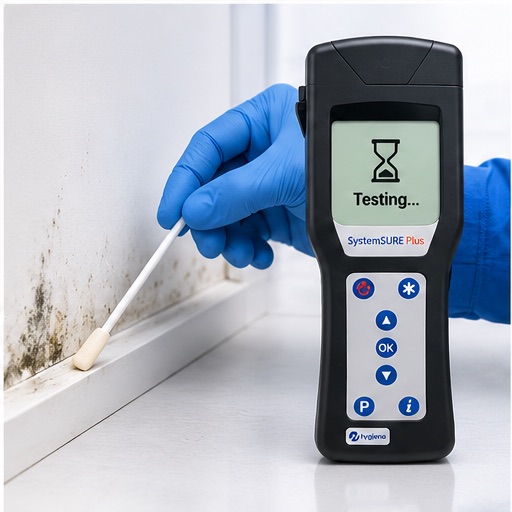
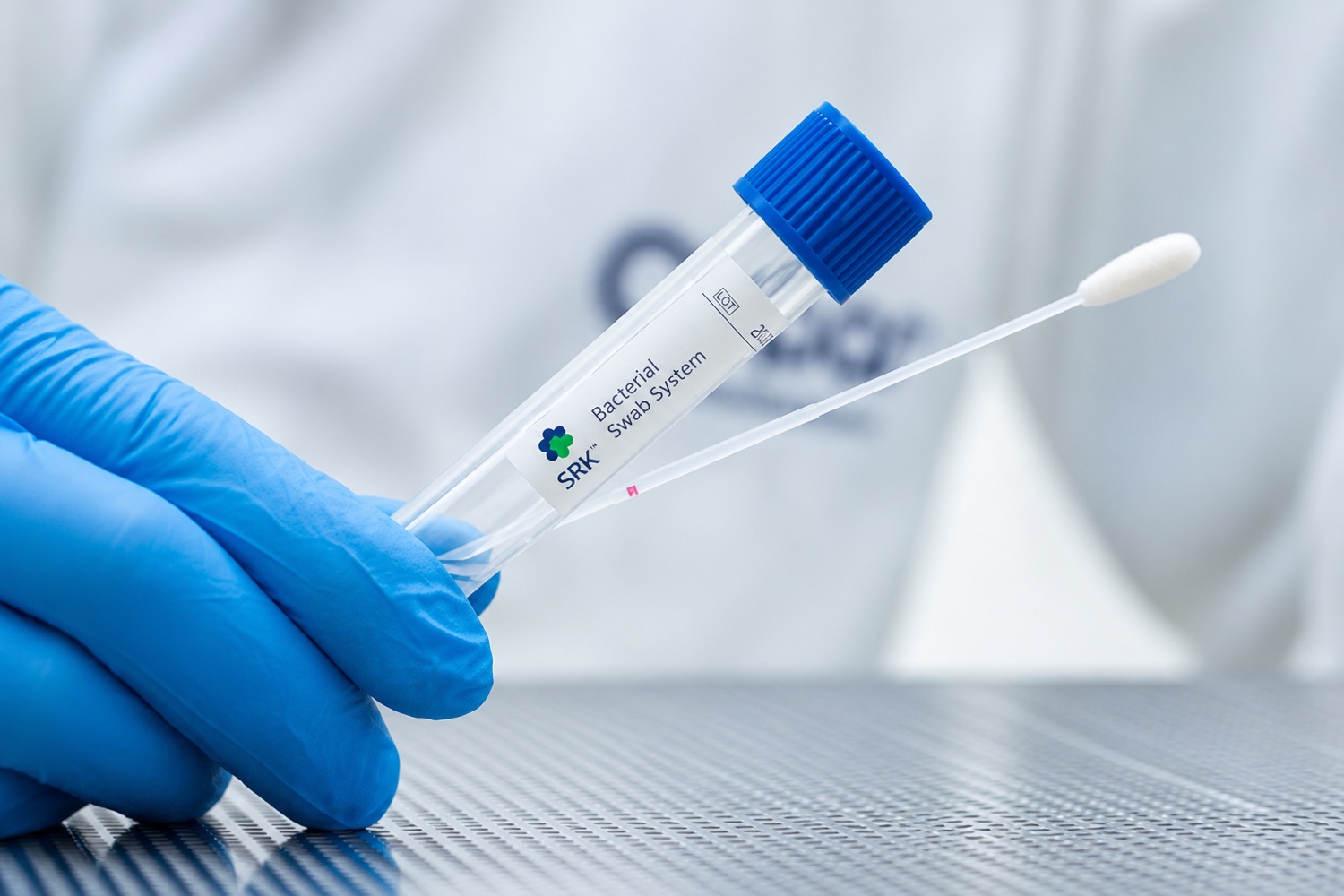
Gloved hand swabbing mould growth on a skirting board beside an ATP testing device Gloved hand holding a sterile bacterial swab tube used for biological contamination testing
Add-On Service 6

Biological, Organic Contamination and Odour Detection Testing

Price £699 + VAT

Description: Our biological and organic contamination testing service identifies biological residues and potential contamination within residential and commercial properties. Depending on the suspected contamination, samples are collected using surface swabs, targeted sampling methods, or other appropriate techniques and submitted to a suitable laboratory for analysis.

Value: Scientifically identifies residues that cannot be confirmed by visual inspection alone. Testing provides verified laboratory evidence to investigate contamination from bodily fluids, human and animal waste, drainage failures and bacterial activity, ensuring remedial cleaning and decontamination works are targeted effectively.

Testing categories can include:

  • Human bodily fluids: Blood and suspected blood residues; urine and urine residues; semen and suspected semen residues; saliva and saliva residues; and other suspected bodily fluid contamination (subject to laboratory capability).
  • Human waste and associated contamination: Faecal matter and suspected faecal residues; biological residues associated with human waste; and indicators of faecal contamination where suitable laboratory tests are available.
  • Animal waste and biological residues: Animal faeces and droppings; urine residues from domestic animals; animal bodily fluid residues (subject to laboratory capability); and biological contamination associated with animal activity.
  • Bacterial contamination: General bacterial contamination; selected bacterial indicators associated with faecal contamination; and specific bacterial organisms where targeted laboratory testing is available.
  • Other biological and organic residues: Suspected biological deposits on floors, walls and other surfaces; organic residues associated with human or animal activity; and mixed biological contamination where the material cannot be readily identified visually.

This service can be beneficial when:

  • A property has experienced sewage backups, soil pipe leaks, or escape of water.
  • Unexplained foul or persistent organic odours remain present.
  • Contamination from animal pests, droppings, or domestic pets is suspected in structural voids.
  • Trauma, severe neglect, or tenancy turnover requires formal clearance and verification.
  • Clear laboratory confirmation is required before and after decontamination or remedial works.

Note: The appropriate test will depend on the material suspected, the surface being tested and the level of identification required. The survey fee is credited when repairs are completed by us.

Click Here To Check Availability And Book Now ❯ View Full Details ❯

Contact Us

If you have some questions, please complete this form:

Book and Pay for a survey

If you are ready to book a survey and pay, please complete this form:

Book Survey

Contact Us

If you have some questions, please complete this form:

Book and Pay for a survey

If you are ready to book a survey and pay, please complete this form:

Book Survey

Contact Us

If you have some questions, please complete this form:

Book and Pay for a survey

If you are ready to book a survey and pay, please complete this form:

Book Survey