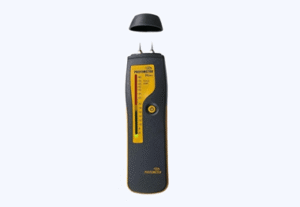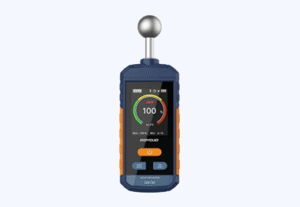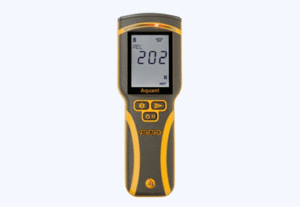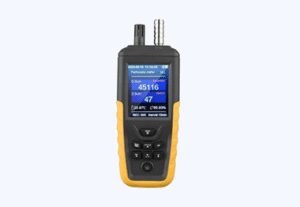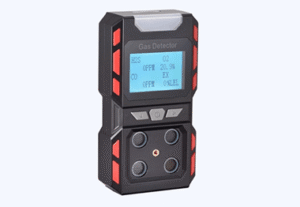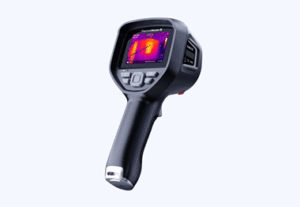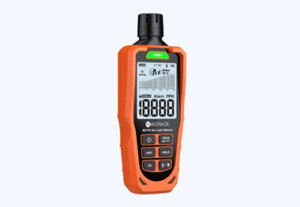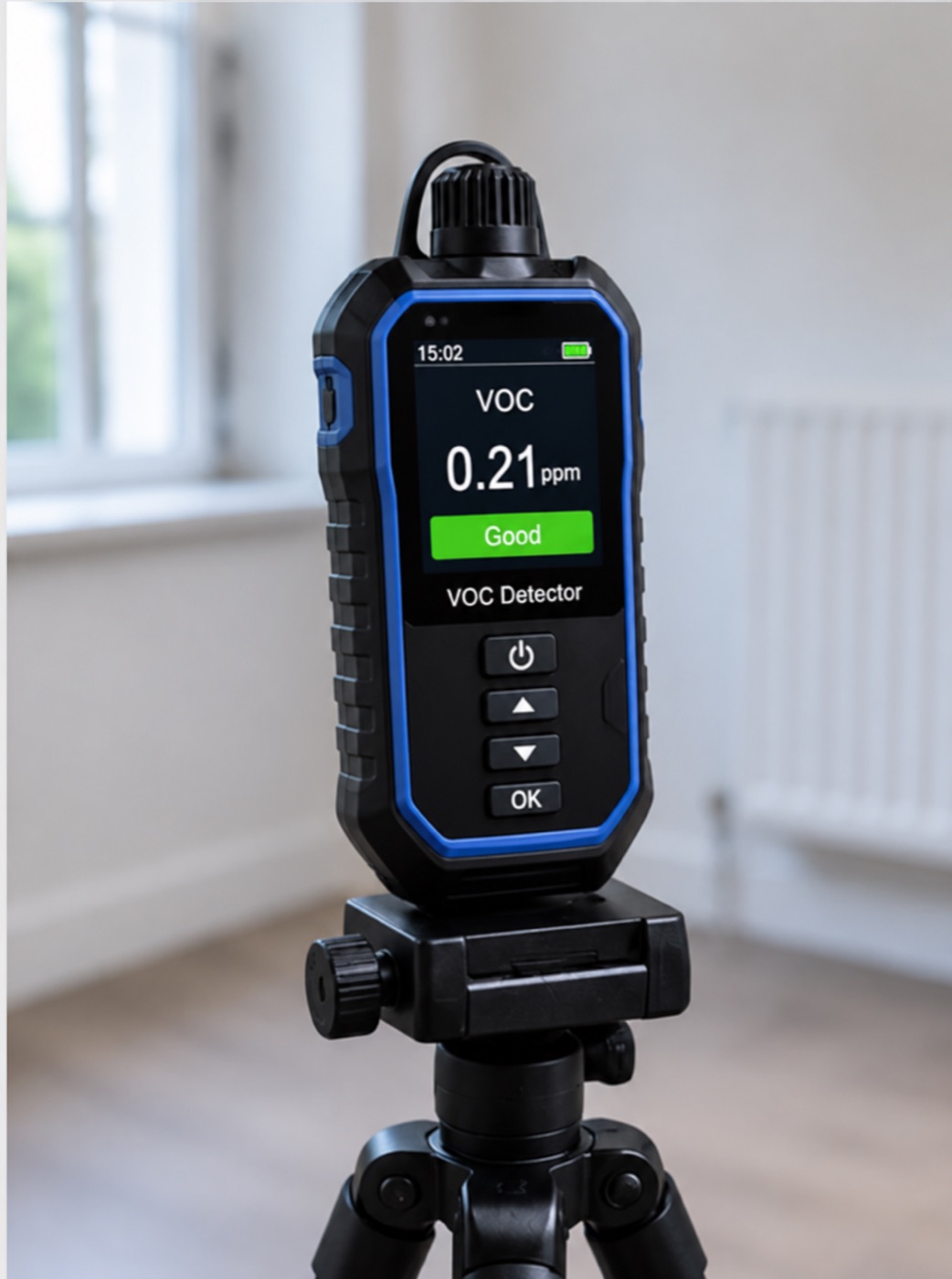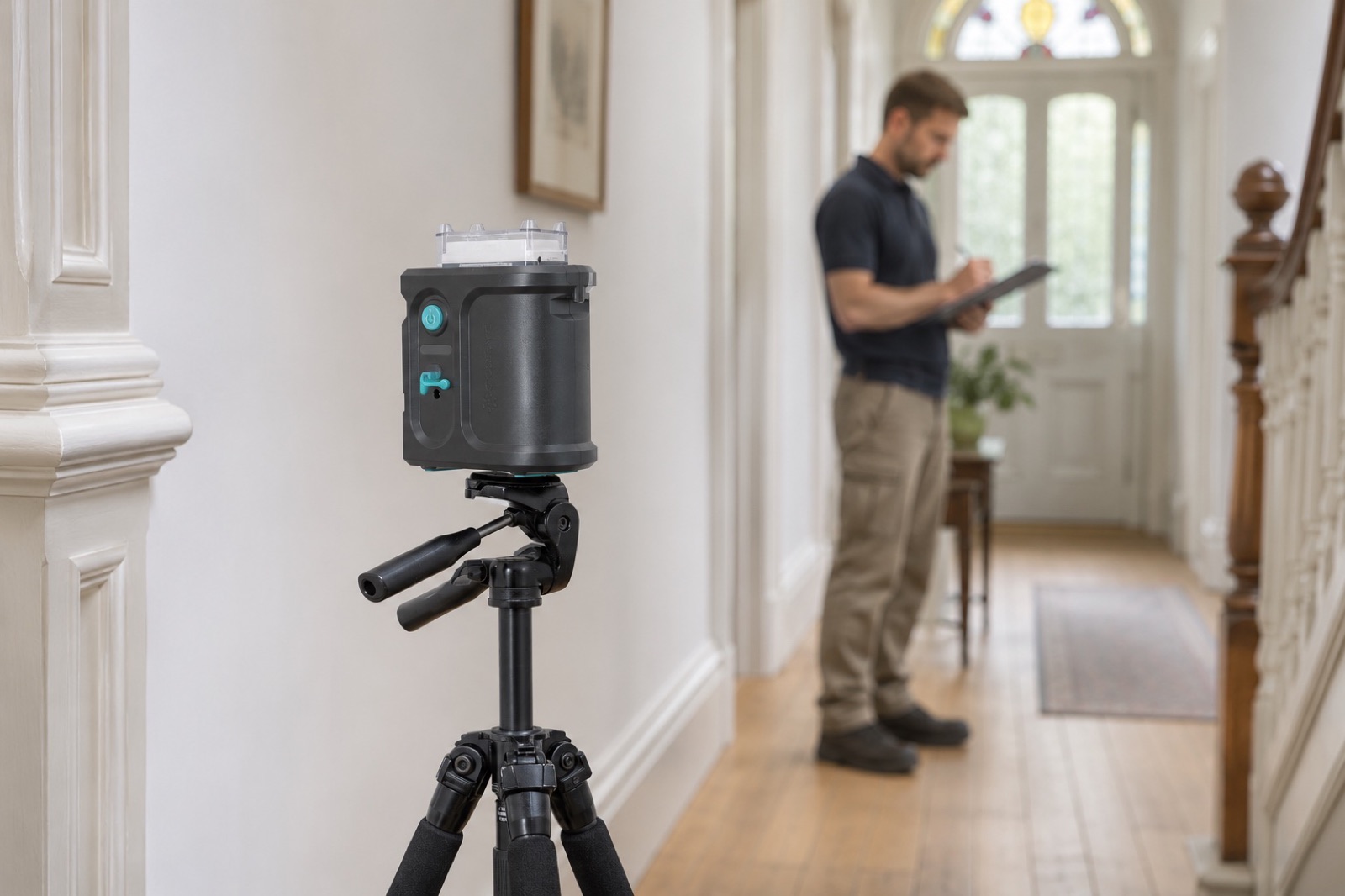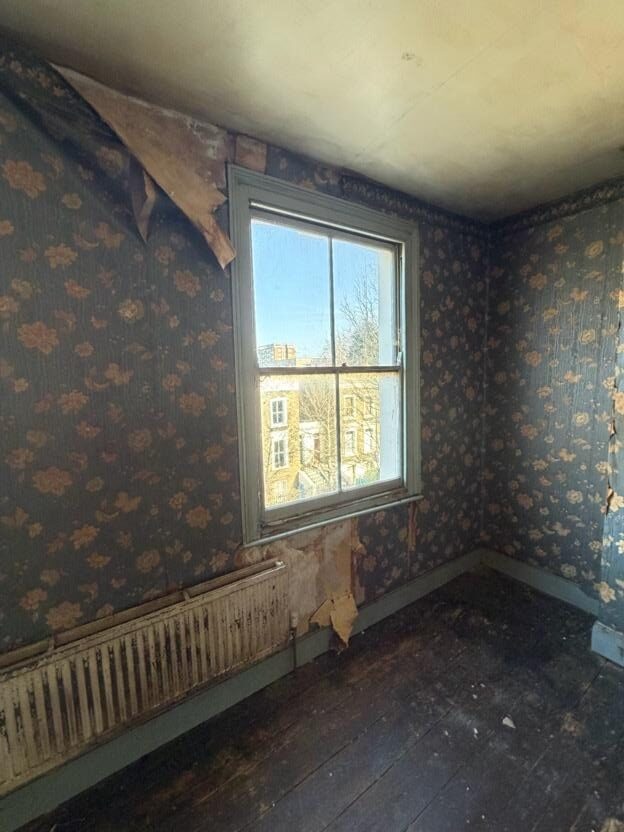
A Level 3 damp survey was commissioned for a residential house in Islington (N1) to determine the cause of severe moisture ingress across the building. The property owner requested an independent investigation to receive a complete diagnostic report free from commercial sales pressure. The inspection assessed the basement, upper floors, external fabric and roof space.
About the Issue
The property owner grew concerned after discovering saturated masonry in the basement, rotted window sills and crumbling plaster around upper window reveals. They sought an expert opinion to identify all active moisture sources and establish a logical repair plan.
The Challenge
The diagnostic process covered internal living areas, subterranean structures, external masonry, joinery, drainage and the loft space.
The investigation produced clear factual evidence:
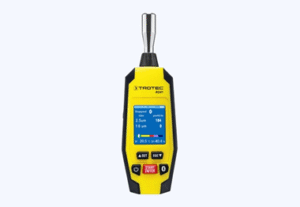
- Internal relative humidity was recorded at 67.3% RH, well above the healthy 40–60% RH threshold, increasing condensation risk.
- All basement walls suffered from rising damp, with a damp floor slab and penetrating damp under the front entrance stairs due to an absent waterproofing barrier.
- Window joinery was in poor condition with rotted sills and lower frame sections, allowing water ingress around upper window reveals and ruining internal plaster.
- External building defects included missing render near roof level, leaking downpipes and gutters, rear drainage issues, uncapped chimney pots, a rotted rear door frame and accumulated leaf debris raising ground levels against rear walls.
Loft testing confirmed zero woodworm or structural timber rot. The surveyor concluded that external rainwater ingress was actively saturating internal masonry, establishing that external building repairs had to precede internal basement waterproofing.
The Solution
The report outlined a structured, six-stage remedial plan based on priority:
- Priority 1: Hire a qualified roofer to fix leaking gutters and downpipes, replace missing high-level render, install chimney caps on all chimney pots and correct rear drainage.
- Priority 2: Repair or replace defective window frames, rotted sills and the rear door frame, externally resealing window perimeters.
- Priority 3: Clear leaf debris and lower rear external ground levels.
- Priority 4: Waterproof the basement by stripping plaster to 1.4m height, injecting a chemical DPC, applying salt neutraliser, tanking slurry, waterproof Sika render and breathable plaster, while installing full tanking, waterproof render and a waterproof concrete floor slab under the front stairs.
- Priority 5: Strip and replace water-damaged plaster around window reveals once dry and redecorate exterior sills and panels.
- Priority 6: Introduce mechanical ventilation or dehumidification to manage internal humidity.
The Outcome
The independent survey gave the property owner total clarity on how to address their home’s damp issues. By demonstrating that external leaks were actively feeding internal moisture, the report saved the owner from wasting money on internal plastering that would have quickly failed.
Why This Case Matters
Attempting internal waterproofing while exterior roof, gutter and window leaks remain active is a common and expensive mistake. Independent diagnostic surveys establish the true cause of moisture ingress, protecting property owners from ordering ineffective, out-of-sequence building works.