
Independent damp specialist
Why Hiring a Damp Specialist is a Smart Investment
If you live in the UK, you know that it’s not exactly the driest country in the world. We get quite a lot of wet weather, even during the summer months, so it’s no surprise to most to hear that the average UK home will typically suffer from damp problems at some point. Issues with damp and mould can be quite common in British properties due to the high levels of rain that we experience throughout the year. Damp can develop for many reasons on your internal walls due to damaged damp-proof courses, condensation, faulty drains and guttering, and more. Whether you own a UK home or are considering buying a new property, there are many reasons why you might consider working with a damp proof specialist.
Why Hire an Independent Damp Surveyor?
Damp can be the result of several issues at home, from condensation from general living activities, to serious damage to the damp-proof course, gutters, or plumbing system. Damp is often the result of issues in the home that will need to be repaired and dealt with as quickly as possible by a damp proof specialist in order to ensure that the problems do not worsen over time and become even more difficult and expensive to repair. If it is left unchecked, damp is a problem that will certainly not go away on its own – in fact, quite the opposite, since it will spread and worsen, leading to more serious issues in the home like mould, which could eventually damage the structure of the property if left for long enough.
Reasons You Might Need a Damp Specialist
There are several reasons why you may need a damp proof specialist to inspect your current property or a property that you are considering purchasing in the future. Some of the main reasons to work with a damp proof specialist include:
Checking the Damp Proof Course
The damp proof course is a waterproof layer that is designed to block moisture from getting through to your walls. Damp proof course problems and faults are some of the biggest causes of rising damp in the home and can lead to serious issues if left unattended. If your damp proof course is not present, or it is no longer working correctly, it will be ineffective in preventing moisture reaching the walls which can quickly lead to rising damp, which appears at the bottom of the walls on the ground floor. Damp that is present at the bottoms of the walls just above your skirting boards is often the biggest sign of an issue with the damp proof course.
Older Homes
If you live in or are considering purchasing an older home, it’s important to be aware that the risk of damp in a property will usually be higher when it is older. Since older properties were built in a way that allowed the materials to breathe, this can often increase the risk of damp as the airflow can also allow moisture from the outside into the home. On the other hand, more modern houses tend to have newer and more effective damp-proofing systems, making the risk of damp lower.
Condensation
Condensation is one of the biggest causes of damp on the internal walls of a property. It occurs when warm air comes into contact with the colder surface, which causes the moisture to evaporate from the air. A damp proof specialist can help with removing and treating any damp issues that have been caused by condensation in the home and advising you on the best methods of preventing the problem in future.
What is Included in a Damp Survey?
A damp survey will look for three main types of damp that are commonly found in homes, which are rising damp, penetrating damp and condensation damp. Understanding these different types of damp and how they differ can help you get a better idea of which one is affecting your property and how to deal with it. The survey will not only determine which type of damp is impacting your home, but also provide you with further information on the severity of the problem and its root cause.
Rising damp is damp that is typically the result of a failure in or a lack of a damp proof course at the property. This type of damp only affects homes that are on the ground floor and looks like damp that is rising up the wall from above the skirting boards. Typically, drainage around the property will need to be improved in order to repair this issue, and a new damp proof course may need to be fitted.
On the other hand, penetrating damp is damp that occurs when water penetrates through the external walls from the outside, where it settles deep into the brickwork. This type of damp will often occur where the external walls are not protected from moisture or if there are cracks and gaps in the wall that allow the moisture through. Most of the time, keeping up with good maintenance of the external walls is required to avoid penetrating damp problems.
Finally, another type of damp that can also lead to problems is condensation damp. This type of damp is different in that it usually comes from moisture that is produced inside the home. From breathing to cooking and showering, there are many daily activities that we all have to do that can produce moisture and warm air, which condensates when it reaches the colder surfaces of the internal walls where it can lead to damp. Good ventilation to remove moisture from the air is essential to preventing this type of damp in your home.
What Can a Damp Expert Find?
A damp expert can be a good investment to make in your home or your potential new property since they can uncover many issues that you may not have realised were present. A damp expert can find various different types of damp in the property even if they are not yet bad enough for you to notice when looking around. Working with a damp expert can also help you find out more about what is causing the damp in your home, providing the information that you need to have the issue repaired as quickly as possible in order to avoid extra costs in the future.
How Can Damp Detectives Help Me Improve My Home?
Working with an independent damp specialist can help you improve your home and avoid issues with damp and mould. There are many ways that a damp expert can help you improve your home, including: providing you with more information about what is causing damp in the home or issues that are likely to lead to damp in the future; and helping you put plans into place to improve the condition of your home, prevent future damp issues, and create a more pleasant living environment.
Could Working with an Independent Damp Specialist Help Me Save Money?
Working with a damp expert can help you save money by making you aware of any hidden damp problems in the home that you were not aware of, which would only worsen over time otherwise. Understanding where the damp problems are in your home and what is causing them as early as possible gives you the chance to determine which repairs need to be made as a matter of priority in order to repair the issue, and what to do to prevent it returning in the future – which could potentially save you thousands in future repair costs.
Do I Need a Damp Inspection When Buying a New Home?
While it’s not required to have a damp inspection when purchasing a new property, it can be a wise idea. Damp is typically an issue that will be searched for and reported on during a home buyer’s survey, and in some cases, the surveyor might recommend that you have an additional damp survey carried out by an independent damp specialist, if the results show that damp is a problem for your property. Having this carried out can have many benefits including helping you save money on repair costs in the future, negotiating a lower price for the property, or even making sure that you are actually investing in the right house for you.
How to Find the Right Damp Specialist Near Me
You can find a good local damp specialist by getting recommendations from property experts such as chartered surveyors, estate agents, conveyancing solicitors or mortgage lenders. You may also want to ask your friends and family for recommendations of damp specialists that they have used in the past and have had a good experience with. Before choosing which specialist to work with, it’s a good idea to spend some time conducting research into their expertise and experience, and get several quotes before you make a final decision.
Damp in the home can be caused by many issues and is not always immediately obvious. A damp specialist can survey your home to find any hidden damp problems to help you prevent them getting worse in the future.
Return to main independent damp surveyors page.

Equipment Used During Our Surveys
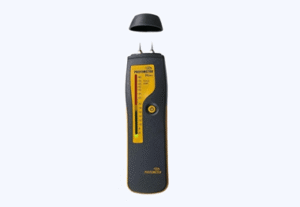
Equipment Used During Our Surveys
Purpose:
Takes comparative moisture readings from walls, ceilings, floors and timber to identify abnormal moisture patterns.
Common Uses / Notes:
Used when investigating rising damp, penetrating damp, condensation and leaks. Readings support the survey but are not a diagnosis on their own.
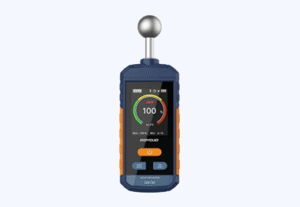
Subsurface Moisture Meter
Purpose:
Detects moisture beneath the surface of suitable building materials.
Common Uses / Notes:
Helps determine whether moisture is confined to surface finishes or extends into the building fabric.
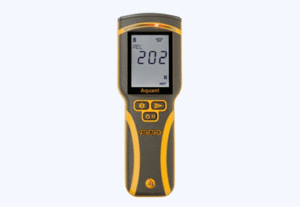
Non-Damaging Moisture Scanner
Purpose:
Scans surfaces for hidden moisture without causing damage.
Common Uses / Notes:
Ideal for decorated walls, ceilings and flooring where pin testing would be undesirable.
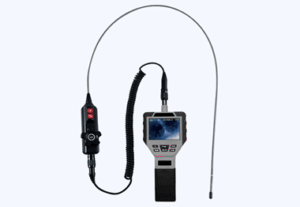
High-Resolution Borescope Camera
Purpose:
Inspects hidden or difficult-to-access areas without opening up large sections of the building.
Common Uses / Notes:
Used beneath floors, inside cavities, behind walls and around pipework to identify damp, leaks, decay and concealed defects.

4K Aerial Inspection Drone
Purpose:
Captures high-resolution images of roofs and other inaccessible external areas.
Common Uses / Notes:
Inspects roof coverings, chimneys, flashing, gutters, valleys, parapets and high-level masonry. Subject to weather, safety requirements and flight regulations.
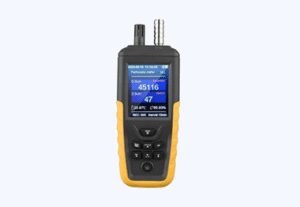
Atmospheric Humidity Sensor
Purpose:
Measures indoor relative humidity levels.
Common Uses / Notes:
Helps assess condensation and mould risk alongside temperature, ventilation, heating patterns and room usage.
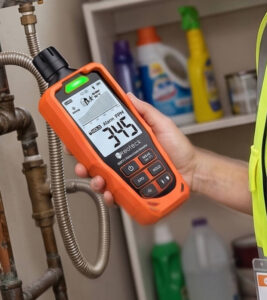
Gas Detection Monitor
Purpose:
Screens for certain airborne gases where unusual odours are present.
Common Uses / Notes:
May detect gases associated with drainage, combustion or flammable substances. Does not replace inspection by a Gas Safe registered engineer where gas appliances or pipework are involved.
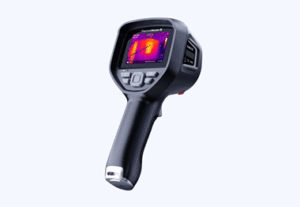
Thermal Imaging System
Purpose:
Identifies temperature differences across building surfaces.
Common Uses / Notes:
Helps locate cold spots, thermal bridging, insulation defects and areas associated with concealed moisture. Results always require further investigation to confirm the cause.
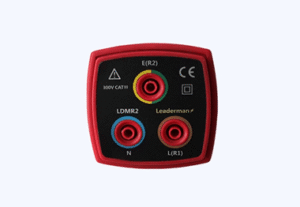
Basic Socket and RCD Tester
Purpose:
Performs limited electrical checks during comprehensive surveys.
Common Uses / Notes:
Can identify basic socket wiring issues, AC voltage and RCD operation. It is not an Electrical Installation Condition Report (EICR).
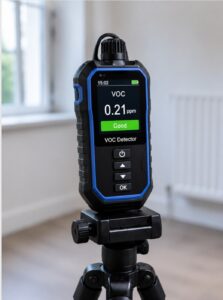
Chemical Vapour Testing Device
Purpose:
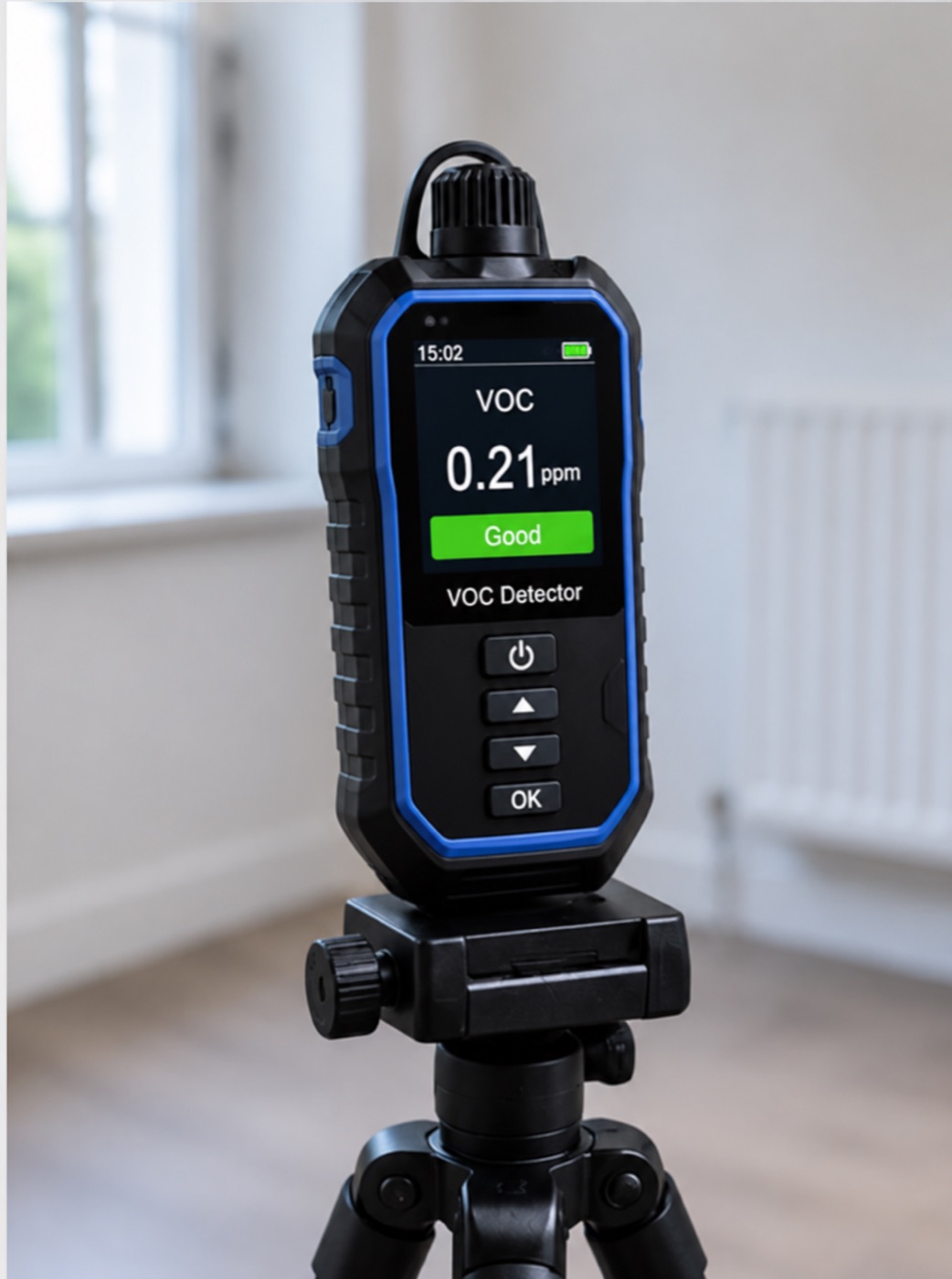
Screens for airborne volatile organic compounds (VOCs) and formaldehyde.
Common Uses / Notes:
Used where chemical odours, emissions from materials or indoor air-quality concerns are suspected after leaks or refurbishment.
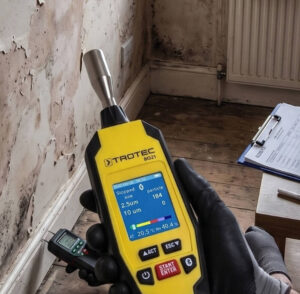
Fine Air Particle Counter
Purpose:
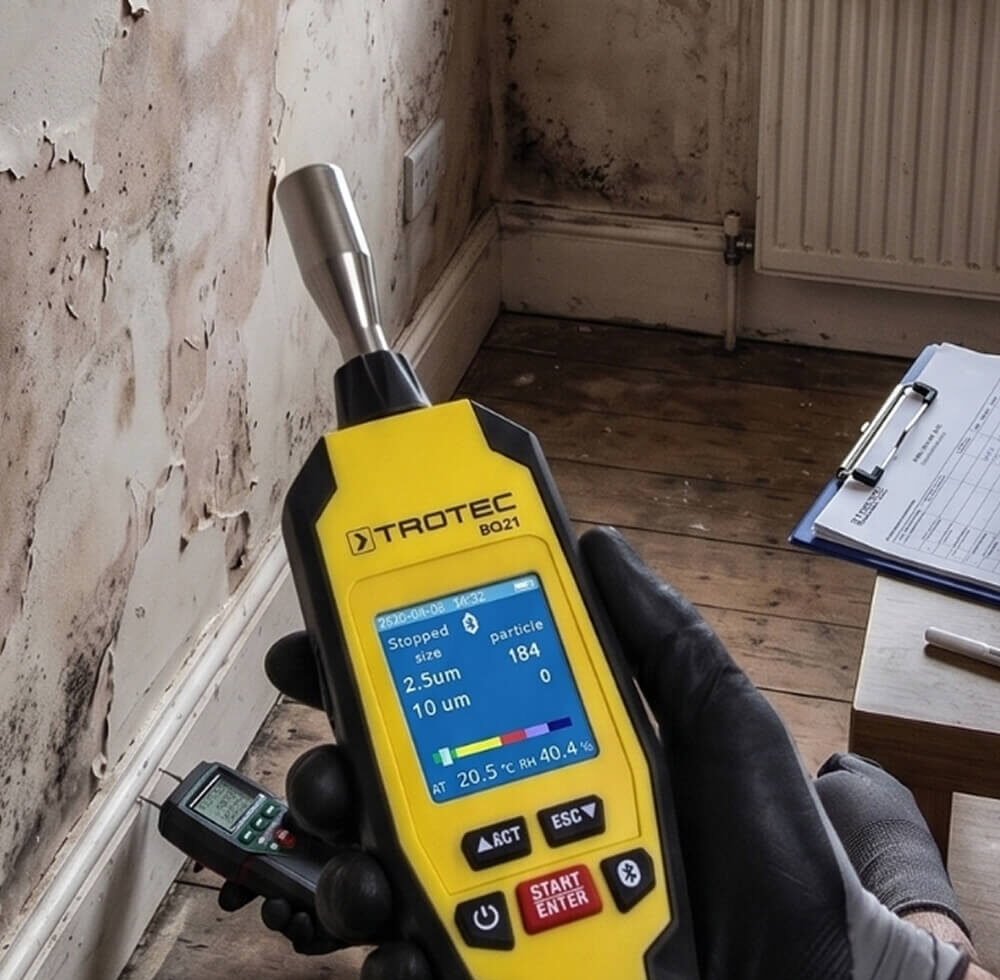
Measures airborne particulate matter (PM1.0, PM2.5 and PM10)
Common Uses / Notes:
Assists with investigations involving dust, smoke, mould concerns, post-construction contamination and indoor air quality following water damage.
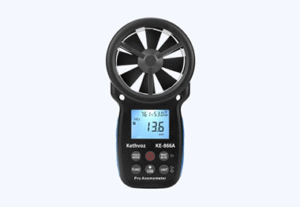
Extraction and Air-Movement Tester
Purpose:
Measures the performance of extractor fans and mechanical ventilation systems.
Common Uses / Notes:
Used in kitchens, bathrooms and utility rooms to identify poor ventilation that may contribute to condensation and mould growth.
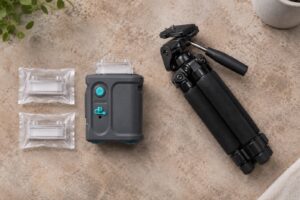
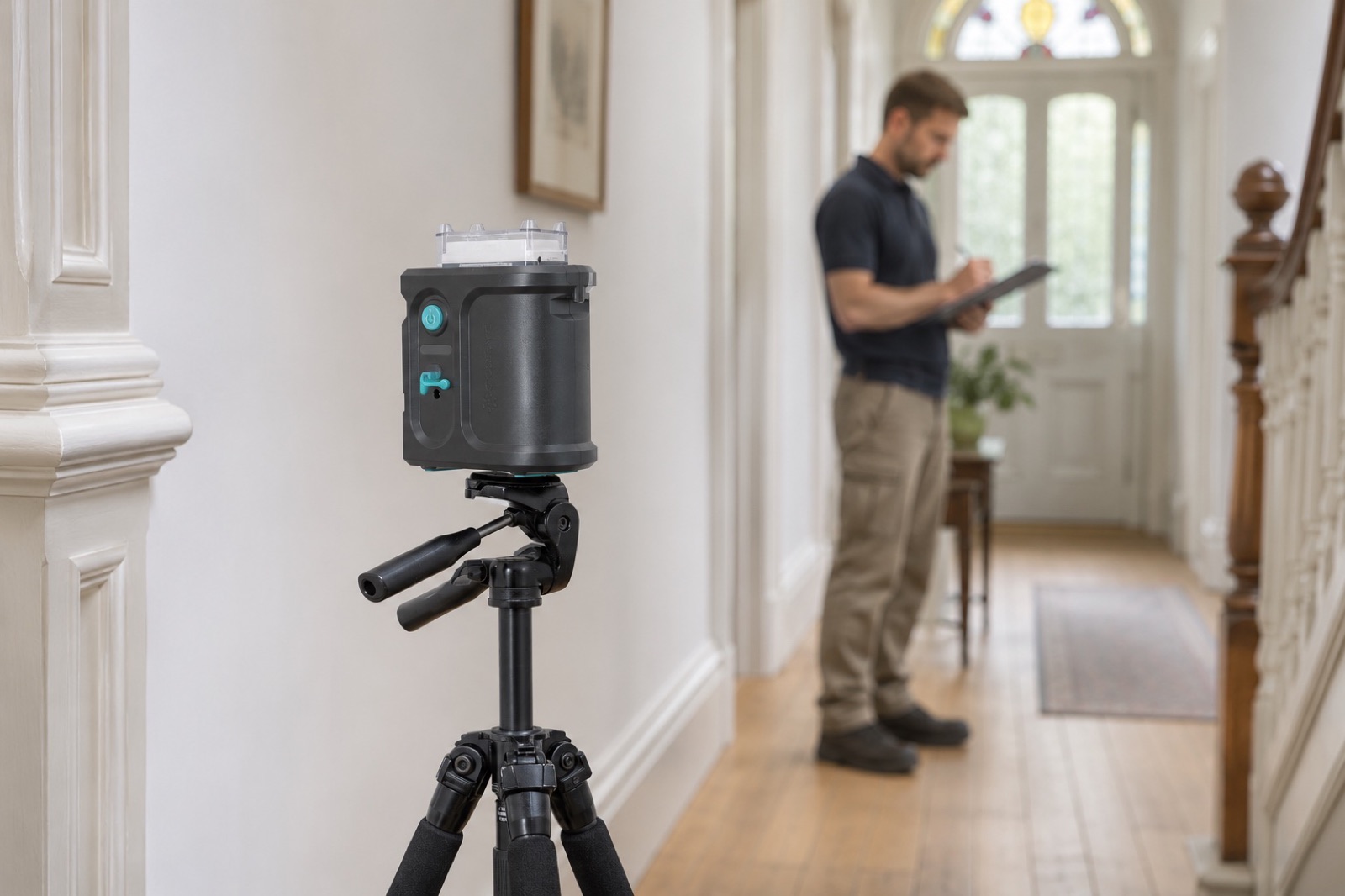
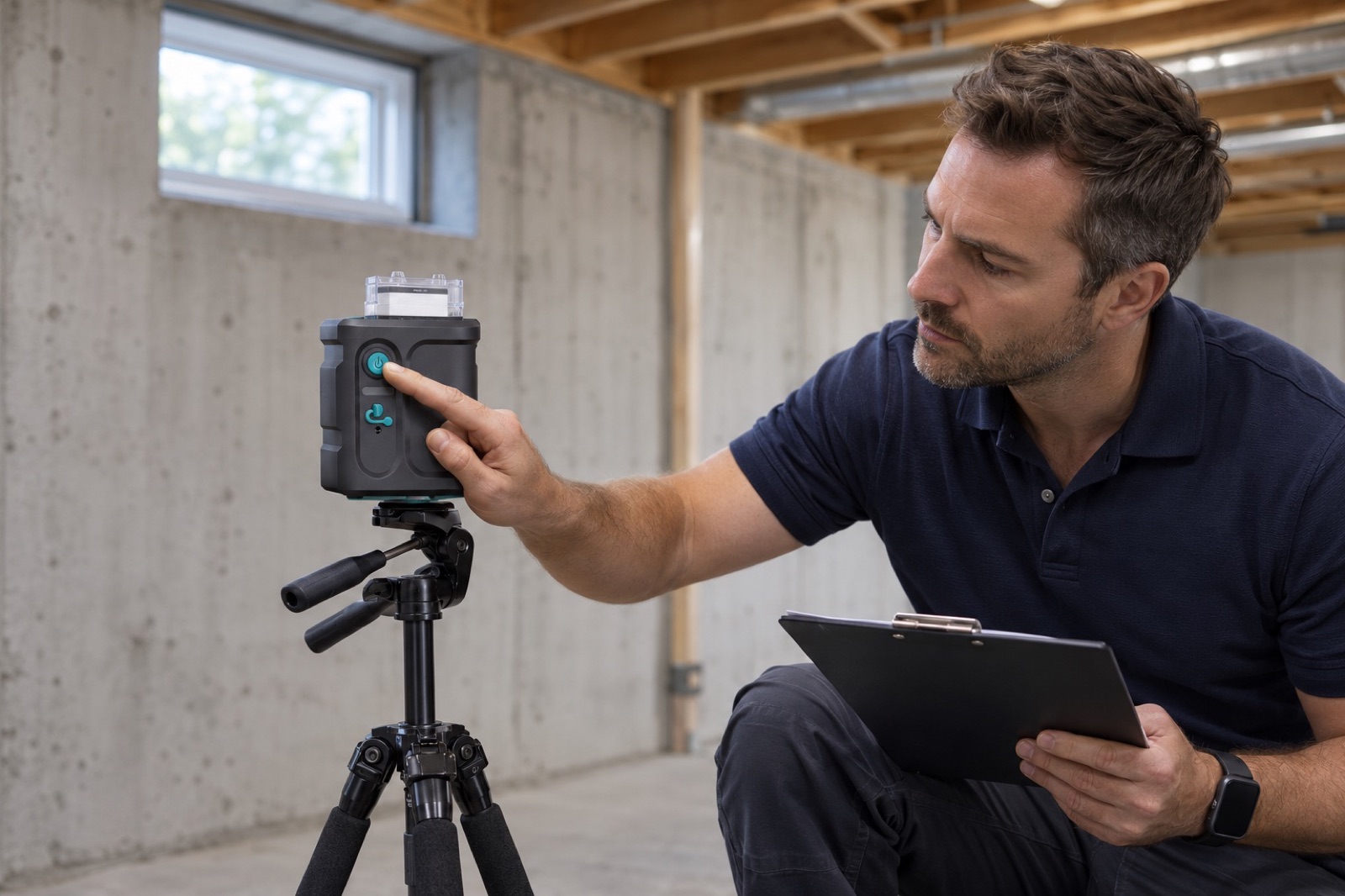
Air Sampling Pump
Purpose:
Collects airborne mould spore samples from indoor air for independent laboratory testing.
Common Uses / Notes:
Used when airborne mould contamination is suspected without visible growth, alongside outdoor baseline samples for comparison.
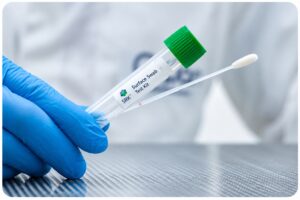
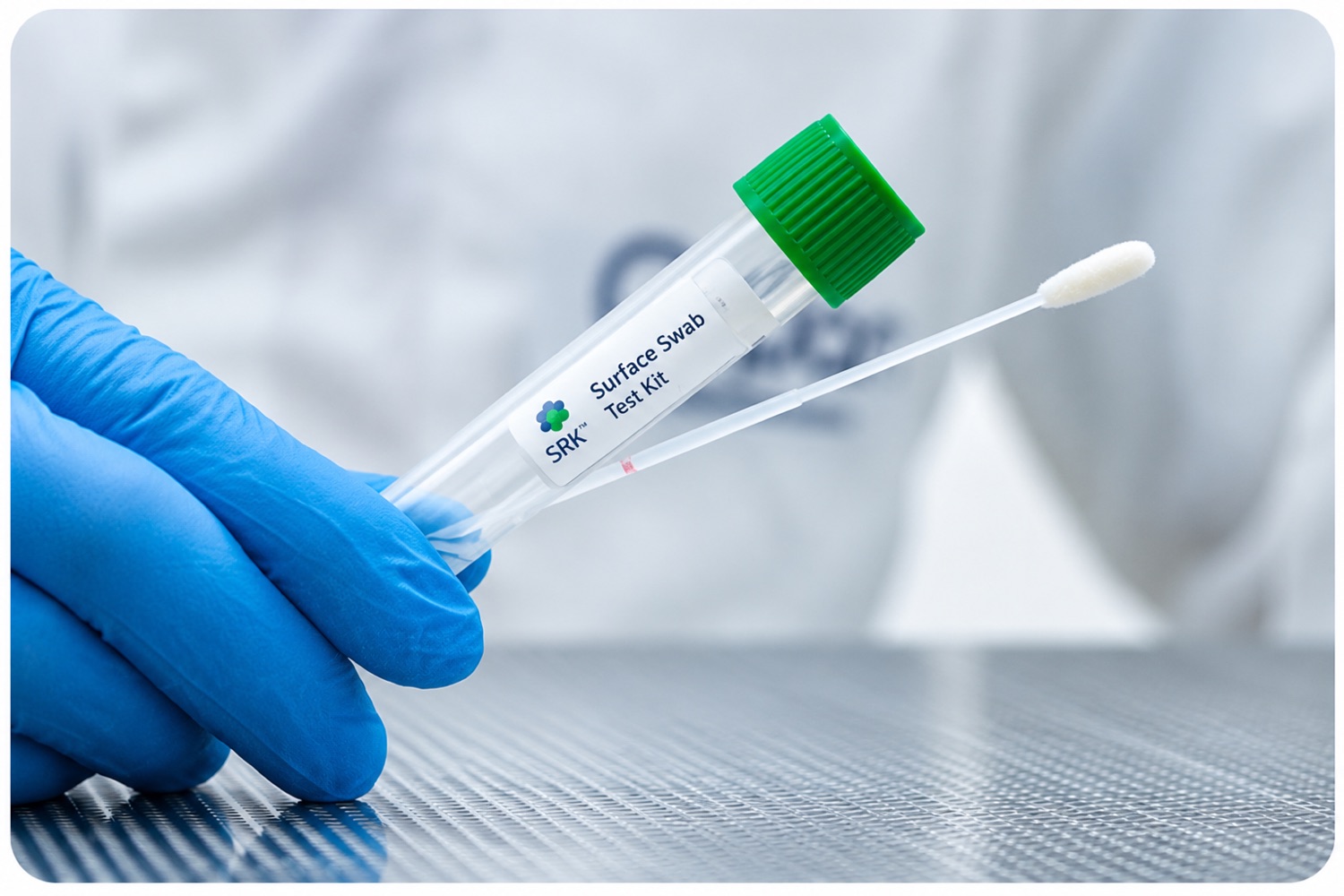
Laboratory Swab Sampling Kit
Purpose:
Collects sterile surface samples for off-site laboratory testing.
Common Uses / Notes:
Used to identify specific mould species via qPCR DNA analysis or verify biological and bacterial residues on surfaces.
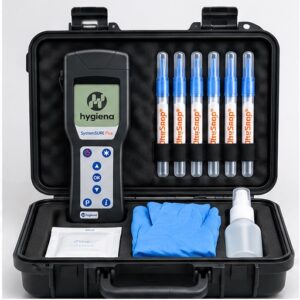
ATP Testing Meter
Purpose:
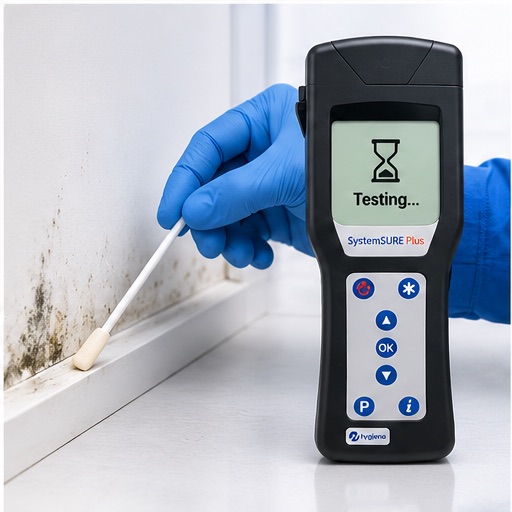
Measures adenosine triphosphate (ATP) on surfaces to screen for active organic and biological matter.
Common Uses / Notes:
Provides rapid on-site hygiene readings before and after cleaning. Does not identify specific bacteria or mould species.
Survey Levels and Equipment Provided
Select Your Survey
Basic Moisture Survey
Standard price: £299 + VAT
Special offer: £199 + VAT until the end of this week
The Level 1 survey provides a basic assessment of the main accessible internal surfaces. It is most appropriate for simple, localised damp concerns where advanced testing is not required.
Equipment Included
- Professional damp meter
Survey Checks
- Accessible walls
- Accessible floors
- Ceilings
- Visible plumbing and drainage leak inspection
- Damp-control and prevention information
Suitable For
This survey is suitable for a customer who has found an isolated damp patch, suspects rising damp in a limited area or wants a straightforward check of the property’s accessible surfaces.
Only a standard damp meter is included. Customers requiring deep moisture detection, timber inspection, thermal imaging or roof inspection should select a higher survey level.
The survey fee will be deducted if we carry out the recommended work.
Damp, Moisture and Timber Survey
Standard price: £399 + VAT
Special offer: £299 + VAT until the end of this week
Level 2 includes everything in the Level 1 inspection and adds deeper moisture detection, non-invasive scanning and timber assessment.
Equipment Included
- Professional damp meter
- Deep-reading moisture meter
- Non-invasive moisture scanner
Survey Checks
- Accessible walls, floors and ceilings
- Visible plumbing and drainage leak checks
- Subsurface moisture readings
- Non-invasive scanning of appropriate materials
- Accessible underfloor and subfloor checks
- Wet rot inspection
- Dry rot inspection
- Woodworm inspection
- Damp prevention information
Suitable For
This level is intended for customers who require a more detailed inspection of dampness and timber condition. It is appropriate when moisture may be concealed within building materials or beneath accessible flooring.
The survey may identify evidence of timber decay or wood-boring insects and assess moisture in locations that cannot be properly examined with a surface meter alone.
Level 2 is particularly useful for homebuyers and sellers who want more information about damp and timber before completing a transaction.
The amount paid for the survey will be deducted from repairs undertaken by us.
Full Damp and Property Condition Survey
Standard price: £499 + VAT
Special offer: £399 + VAT until the end of this week
Level 3 is our most detailed inspection. It combines the checks from Levels 1 and 2 with advanced diagnostic technology, ventilation measurements and external roof-level assessment.
Equipment Included
- Professional damp meter
- Deep-reading moisture meter
- Non-invasive moisture scanner
- Thermal imaging camera
- Indoor humidity sensor
- HD borescope camera
- Airflow and ventilation tester
- 4K inspection drone
- Socket and RCD testing device
Survey Checks
- Accessible walls, floors and ceilings
- Visible plumbing and drainage
- Deep moisture investigation
- Non-destructive moisture scanning
- Accessible floor voids and subfloors
- Wet rot, dry rot and woodworm
- Infrared thermal imaging
- Indoor relative humidity
- Extractor-fan performance
- Borescope examination where suitable
- Visible damp-proof course
- External brickwork and pointing
- Roof coverings and junctions
- Chimney stacks and flashing
- Guttering and rainwater systems
- High-level exterior areas
- General visible structural condition
- Basic Electrical Test, socket and RCD screening
- Drone photographs, subject to safe flying conditions
Suitable For
The Level 3 survey is recommended for buyers, sellers and existing owners who want the most extensive moisture assessment available.
It is especially useful for older properties, houses with several reported defects, basement buildings and cases involving damp, mould, leaks, poor ventilation, timber decay or roof problems.
The inspection considers the property as a connected building rather than examining only the visible damp patch. A roof or gutter defect, for example, may allow water to enter at a high level and appear some distance away internally.
The drone component provides valuable information about roofs, chimneys, parapets and guttering that cannot normally be seen from the ground. These areas may contain hidden repair costs capable of affecting a property purchase.
Identifying damage before buying can help the purchaser budget correctly, request further specialist advice or use the findings during negotiations. Even a relatively small roof defect may cost more to repair than the difference between the survey packages.
If we complete the recommended remedial work, your survey payment will be credited against the price.
Specialist Survey Add-On Services
For complex damp investigations, we offer six specialised laboratory and environmental testing add-ons:

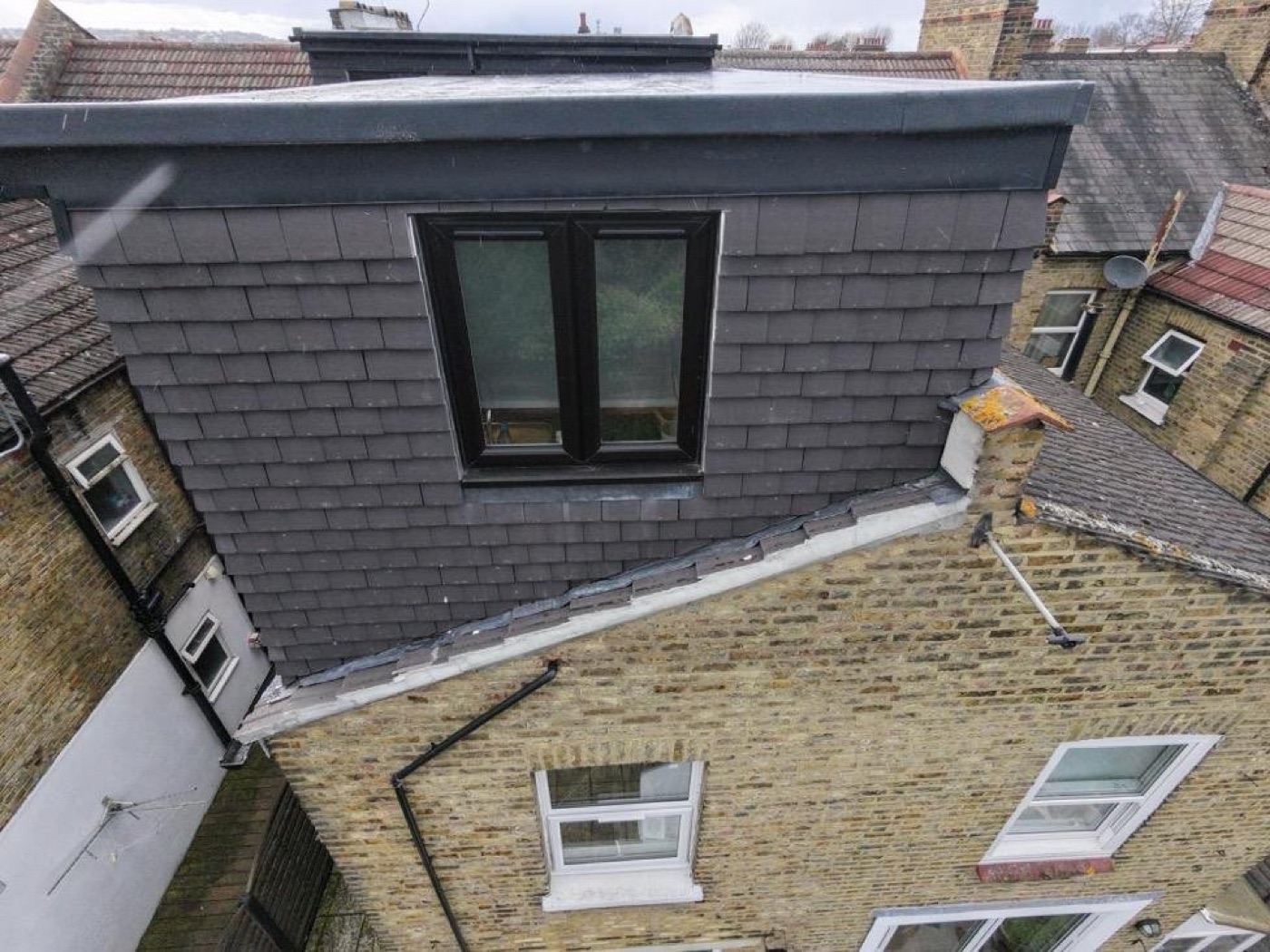
4K Drone Roof Survey
Price £199 + VAT
Description: A detailed aerial roof survey using high-resolution 4K drone imagery to inspect roof coverings, chimney stacks, guttering and other external roof features. The survey provides clear photographic and video evidence of visible defects, damage, deterioration and potential maintenance issues, including areas that are difficult or unsafe to access from ground level.
Value: Findings are documented with supporting imagery, helping identify visible problems and assess the external condition of the roof and associated structures without the need for direct physical access or costly scaffolding. This ensures external defects causing water ingress and penetrating damp are accurately pinpointed.
This service can be beneficial when:
- Roof coverings, chimney stacks, flashings, or parapets cannot be safely viewed from ground level.
- High-level penetrating damp, ceiling staining, or chimney damp is present inside the property.
- Guttering, valleys, or rainwater goods are suspected of overflowing or leaking into masonry.
- Purchasing or maintaining a multi-storey or period property with complex roof structures.
- Clear photographic and video evidence of external defects is required before carrying out repairs.
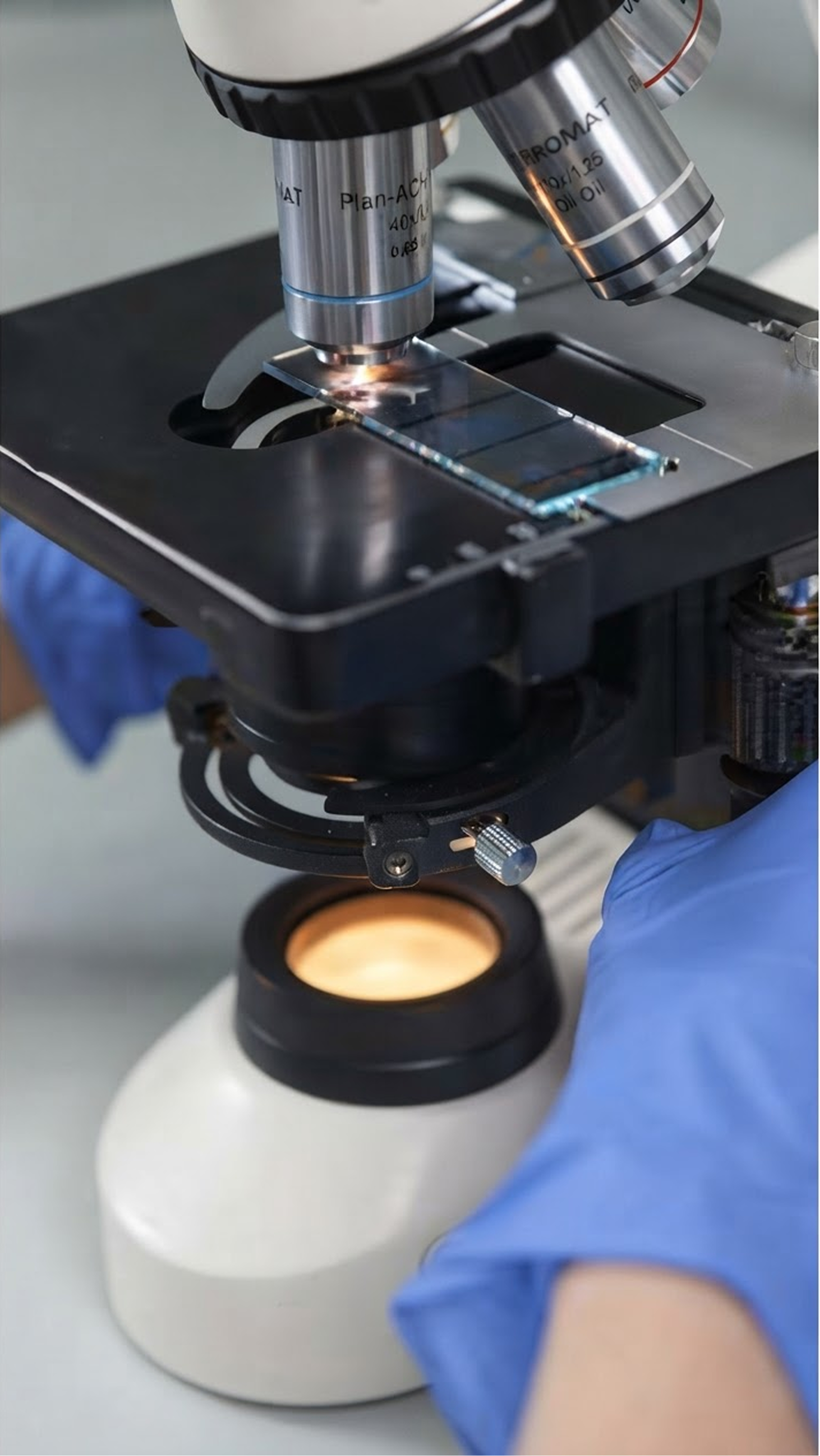
Mould Identification & qPCR DNA Testing
Price £299 + VAT
Description: Surface swab samples are collected and sent to an accredited laboratory for advanced qPCR DNA analysis. Identifies exact mould species, measures spore concentrations and detects hidden fungal growth behind furniture, within void spaces, or under floorboards.
Value: Provides precise scientific data regarding mould toxicity and contamination levels, helping establish the exact scale of cleaning, drying and structural remediation needed.
Laboratory mould testing may be useful when:
- There is an unexplained musty odour.
- Visible mould repeatedly returns.
- Water damage occurred previously.
- Mould is suspected behind cupboards or furniture.
- Contamination may be present in a concealed location.
- The visible extent of growth is uncertain.
- Independent results are needed.
- Remediation work is being planned.
Note: The results can provide a clearer indication of whether contamination appears minor, concentrated or potentially widespread. This information may be used when deciding the scale of cleaning, removal, drying or remedial work required. Testing should be combined with an investigation of the moisture source. Removing visible mould without resolving the underlying condensation, leak or ventilation problem may allow it to return. Survey fee credited against subsequent remediation works completed by us.
Mould Air Quality Testing (Air Pump Test)
Price £299 + VAT
Description: This test uses a specialist air-sampling pump to collect airborne mould spores from inside a property, with outdoor air sampling where appropriate for comparison. Samples are sent to an accredited laboratory to assess airborne mould spore concentrations and identify mould types where the analysis allows.
Value: Unlike a surface swab test, which checks for mould DNA on a specific surface, air sampling investigates mould spores circulating in the air, including where visible mould growth may not be present. This test helps investigate suspected airborne mould contamination and supports damp and mould assessments so that appropriate remedial action can be determined.
This service can be beneficial when:
- Suspected airborne mould contamination is present without obvious visual signs.
- Occupants experience persistent musty odours or unexplained respiratory irritation.
- Recurrent condensation, poor ventilation, or high humidity issues are suspected.
- Verification of indoor air quality is needed following a leak or water ingress.
- Confirmation is required on circulating spore levels before or after remedial works.
Note: Air mould sampling assesses active airborne spores at the time of testing. Results are analysed alongside external baseline samples, structural moisture readings, ventilation performance and visible property conditions. Survey fee credited when repairs are completed by us.
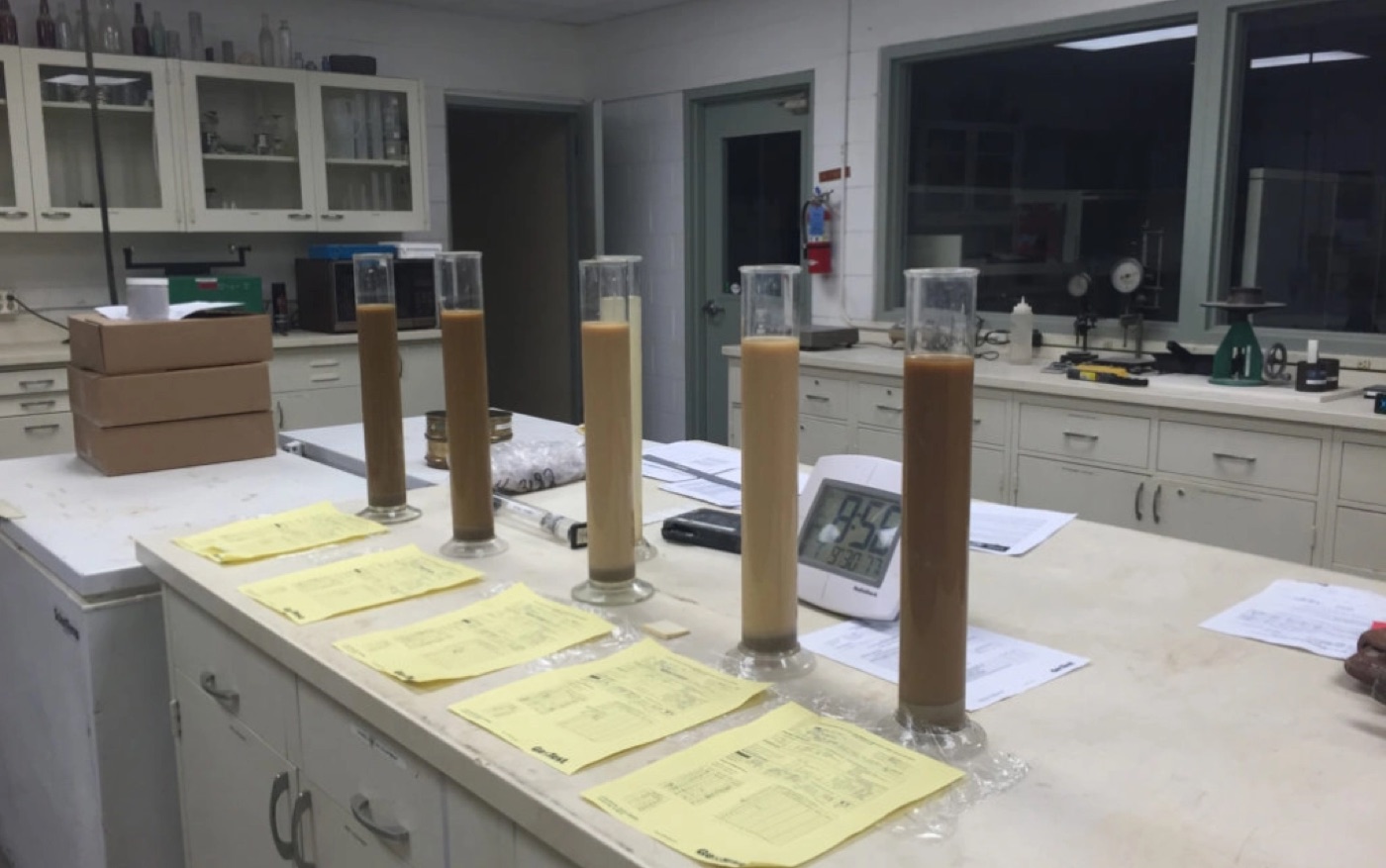
Laboratory Analysis of Plaster Samples
Price £299 + VAT
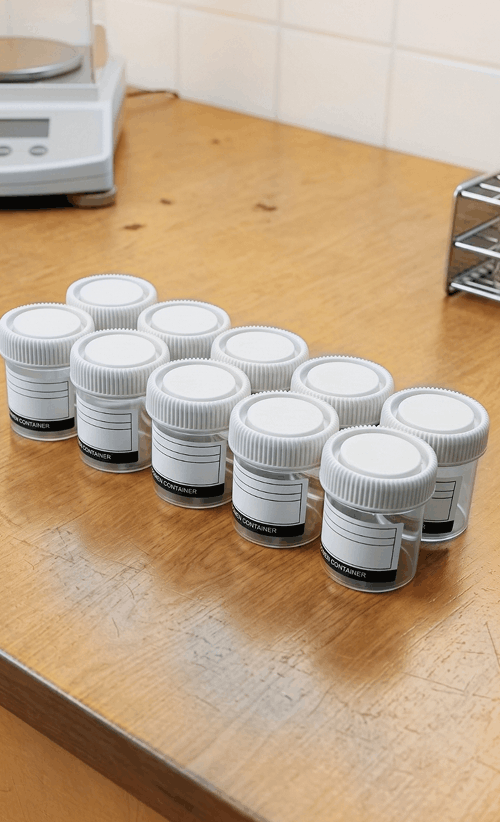
Description: Small plaster samples are extracted from affected masonry walls and submitted to an independent testing laboratory. The lab analyses the sample for hygroscopic salts (specifically nitrates and chlorides).
Value: Scientifically differentiates true rising damp (which deposits ground salts over time) from surface condensation or lateral penetrating damp. Ensures that remedial recommendations are based on chemical analysis rather than surface meter readings alone.
This service can be beneficial when:
- The cause of low-level dampness is disputed.
- Moisture-meter readings are inconsistent.
- A property has undergone previous damp-proofing.
- Old plaster continues to attract moisture.
- Independent laboratory evidence is required.
- Several possible moisture sources are present.
Note: Salt analysis is only one part of the investigation. Results must be assessed alongside the location of moisture, condition of the masonry, external ground levels, damp-proof course and potential plumbing or rainwater defects. Requires minor invasive plaster sampling (the only add-on requiring material removal). Survey fee credited when repairs are completed by us.
Air Quality, Gas, Vapour & Airborne Particle Screening
Price £299 + VAT
Description: Comprehensive environmental air testing including:
- Indoor environmental quality – IAQ
- Volatile organic compounds – VOC and TVOC
- Formaldehyde – HCHO
- Fine airborne particles – PM1.0, PM2.5 and PM10
- Dust and smoke particles
- Sewer gases – H2S, NH3 and CH4
- Flammable gases – CH4 and C3H8
- Carbon monoxide – CO
- Hydrogen sulphide – H2S
- Ammonia – NH3
- Oxygen measurement – O2
- Ventilation and stale-air assessment
- Drain-smell investigation
- Chemical-odour investigation
- Air checks following a leak or flood
- Combustion-related screening
- Building-material off-gassing assessment
- General airborne pollutant monitoring
Value: Pinpoints invisible airborne hazards, toxic sewer gases, chemical off-gassing and foul odours resulting from damp or trapped water.
This service can assist when investigating:
- Persistent foul smells
- Suspected sewer or drain odours
- Chemical smells
- Stale indoor air
- Odours following water damage
- Possible stagnant water
- Building material emissions
- Fine dust after construction work
- Poorly ventilated rooms
Note: Unpleasant odours can have several possible sources. Measurements for specific gases, compounds and particles may help identify which source requires further investigation. The assessment is a screening service and does not replace specialist gas-safety, environmental or medical testing where this is necessary. Survey fee credited against subsequent repair works completed by us.
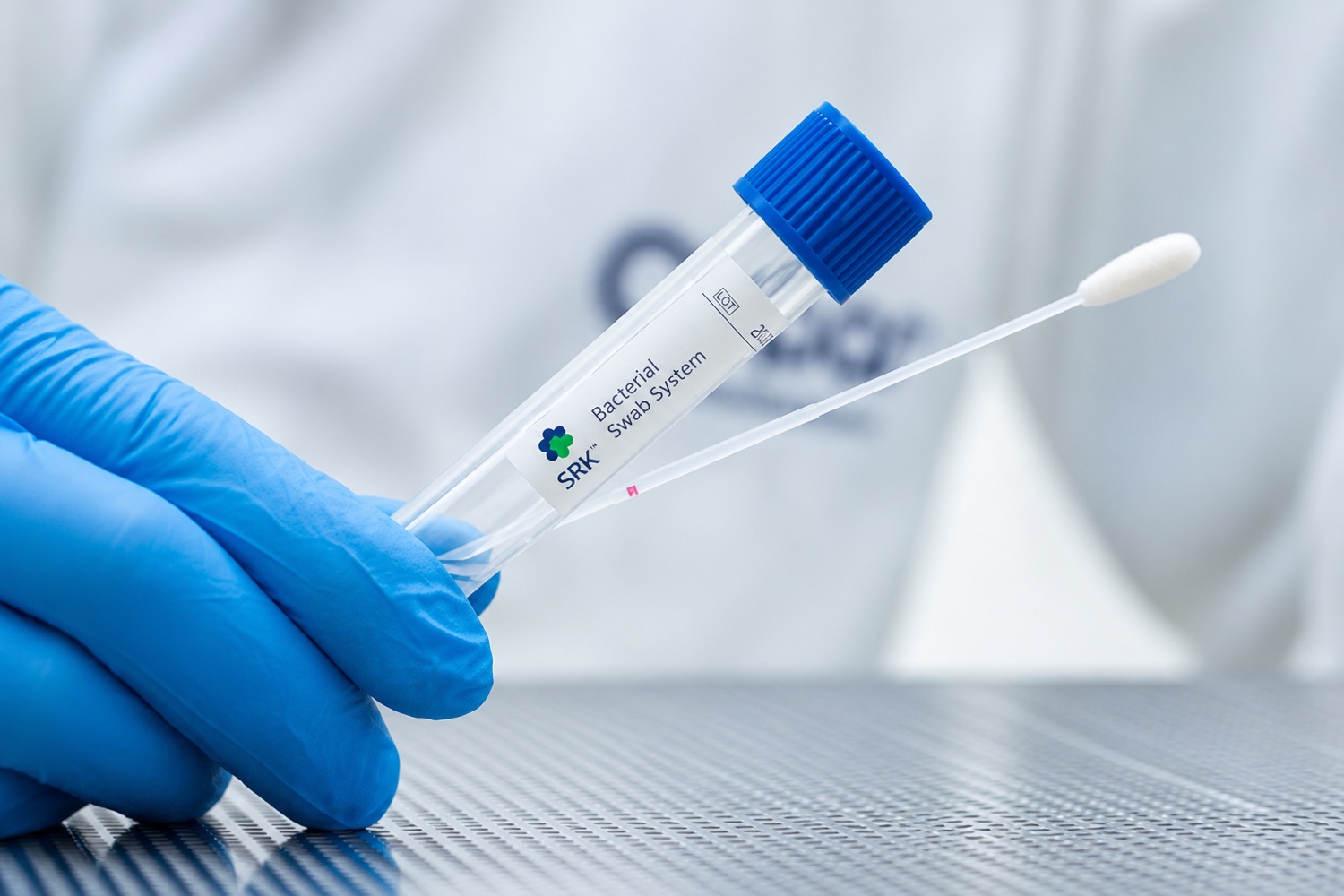
Biological, Organic Contamination and Odour Detection Testing
Price £699 + VAT
Description: Our biological and organic contamination testing service identifies biological residues and potential contamination within residential and commercial properties. Depending on the suspected contamination, samples are collected using surface swabs, targeted sampling methods, or other appropriate techniques and submitted to a suitable laboratory for analysis.
Value: Scientifically identifies residues that cannot be confirmed by visual inspection alone. Testing provides verified laboratory evidence to investigate contamination from bodily fluids, human and animal waste, drainage failures and bacterial activity, ensuring remedial cleaning and decontamination works are targeted effectively.
Testing categories can include:
- Human bodily fluids: Blood and suspected blood residues; urine and urine residues; semen and suspected semen residues; saliva and saliva residues; and other suspected bodily fluid contamination (subject to laboratory capability).
- Human waste and associated contamination: Faecal matter and suspected faecal residues; biological residues associated with human waste; and indicators of faecal contamination where suitable laboratory tests are available.
- Animal waste and biological residues: Animal faeces and droppings; urine residues from domestic animals; animal bodily fluid residues (subject to laboratory capability); and biological contamination associated with animal activity.
- Bacterial contamination: General bacterial contamination; selected bacterial indicators associated with faecal contamination; and specific bacterial organisms where targeted laboratory testing is available.
- Other biological and organic residues: Suspected biological deposits on floors, walls and other surfaces; organic residues associated with human or animal activity; and mixed biological contamination where the material cannot be readily identified visually.
This service can be beneficial when:
- A property has experienced sewage backups, soil pipe leaks, or escape of water.
- Unexplained foul or persistent organic odours remain present.
- Contamination from animal pests, droppings, or domestic pets is suspected in structural voids.
- Trauma, severe neglect, or tenancy turnover requires formal clearance and verification.
- Clear laboratory confirmation is required before and after decontamination or remedial works.
Note: The appropriate test will depend on the material suspected, the surface being tested and the level of identification required. The survey fee is credited when repairs are completed by us.
Contact Us
If you have some questions, please complete this form:
Book and Pay for a survey
If you are ready to book a survey and pay, please complete this form:

Contact Us
If you have some questions, please complete this form:
Book and Pay for a survey
If you are ready to book a survey and pay, please complete this form:
Contact Us
If you have some questions, please complete this form:
Book and Pay for a survey
If you are ready to book a survey and pay, please complete this form: