
What is waterproof render?
Building materials manufacturers are always coming up with new ways of combining chemicals and minerals to provide us with superior products to use in construction. Sometimes, the main aim is an easier application, but improved performance and lower maintenance are also top reasons for this. Render is one product that is often improved with each new development. However, the technical terminology that you might come across when looking for a type of render for your property can be confusing. Keep reading to learn more about waterproof render and the other types of render available, the benefits of each, and which might be the best option for your home.
What is Waterproof Render? Rendering Explained
Render refers to a coating that is applied to the external walls of a building. It is a smooth and often white surface that you might see on the exterior of a home. Traditionally, render was a breathable and flexible covering that was made using a combination of water, lime, and an aggregate like sand. However, while this method hasn’t been as popular in the last decade, recently it has started to come back around and is still used for the conservation of period properties. Today, conventional render is made from a blend of sand, cement, and aggregate. That being said, many modern properties are free from cement. Newer render options can sometimes contain products that are designed to help with waterproofing and prevent algae growth on the walls. You can also find renders that are pre-mixed to work with external insulation or to provide a vibrant coloured finish.
Waterproof Render and Damp Proofing
If you are considering using a waterproof render, then it is a good idea to understand the different types of render available to help you make the right choice. Generally, you can choose from three types of render, which are:
Acrylic: Polymer or acrylic materials are used to bind this type of render. It is usually pre-made and can be ordered in tubs. You can also get acrylic render that is pre-coloured with enough colour to get a vibrant finish on the property. While it is designed to be durable, it is not very waterproof and can be prone to attracting algae.
Mineral: A cement-based top layer render that is applied in one coat and includes polymers and lime in the mix. It typically comes as a dry powder and will need to be mixed with water before applying. It is breathable and very suitable for applying on substrates with mineral wood insulations. However, it is not waterproof and actually quite absorbent, so it usually needs to be painted to protect it against rain.
Silicone: A silicone render is the best option to choose if you want a waterproof render for your property. It offers the same colour choice options and flexibility as acrylic render but has an additional layer of waterproofing. It can also be purchased with additional alkaline content to prevent algae and self-cleans through staying dry. It is also easier to apply compared to the alternatives, but on the downside, it is a premium product that tends to be more expensive.
Will Waterproof Render Stop Damp?
If you want to prevent moisture from getting through the external walls and add an additional layer of waterproofing and damp-proofing to your home, then a silicone render is a good choice. Despite costing more compared to other render options, the benefits of preventing damp and algae growth on the external walls mean that eventually it can help you save money in the long-term by preventing issues that are expensive to fix. Some of the main reasons to choose silicone render include:
1 – Self-Colouring: There are around twenty standard colour options on offer, and the colour is embedding into the topcoat. This means that once you have applied the render it does not need to be painted, and the colour will stay throughout its lifetime, so there’s no need for touch-ups.
2 – Water Repellent: Silicone renders have hydrophobic qualities, which make them very resistant to water and dirt. Not only can it prevent damp from entering through the external walls, but it is also self-cleaning. Most homeowners with silicone render say that all the maintenance they need to do is a light wash every few years.
3 – Flexibility: When it is correctly applied and maintained well, silicone render can be expected to last for more than three decades. The main reason for this is that compared with traditional render products, silicone render is much more flexible, allowing it to be better at resisting cracking and accommodating movement.
Waterproof Render and Damp Proofing in London
Penetrating damp can be one of the most problematic damp types to repair. The good news is that there are various products such as waterproof render that you can use to protect your brickwork and masonry, repel moisture, and prevent damp from getting in through the walls. Bricks and mortar and not completely waterproof, and even newer homes that are built with cavity walls and materials that are harder for moisture to penetrate can still be affected by water coming in from outside and leading to penetrating damp issues. Within the brickwork or stonework of a home, damp and excess moisture can cause internal damage leading to further issues like wet rot and black mould.
What Do You Use to Waterproof Render?
While silicone rendering products and other waterproof rendering can be used to protect your home against penetrating damp issues, it’s important to ensure that you get to the root cause of the issue before you apply any waterproofing products to the walls. Before you can go ahead and apply a waterproof render or any other kind of brick waterproofing product, you should ensure that any faulty mortar, cracks, and other building faults are fully repaired. Check that the structural integrity of your walls is in good condition before applying a product such as a waterproof render or waterproof façade cream.
What are the Alternatives to Waterproof Render?
While waterproof or silicone render can be an ideal way to protect your external walls from moisture and create a barrier to keep your home free from damp problems, there may be some instances where it is not suitable for your property. It is always good to know what alternatives are available to waterproof render in order to ensure that you choose the right damp proofing product for you. Some options that you may want to consider when damp proofing the external walls of your home include:
Water Repellent Paint
Painting the exterior walls of your home can serve various purposes, including improving the aesthetics of your home. If your walls have existing rendering and it would be a large job to remove this and apply a silicone or waterproof render, then you may want to consider covering the existing render or brick with a water repellent paint. These paints do not have a creamy consistency like traditional paints and are easy to apply. Once applied and dried, the paint is very highly impermeable and has a high capacity for bridging cracks. This makes it an ideal choice for surfaces that are cracked and treated. It can also be applied easily over old, cracked coatings making it a much cheaper yet very effective option.
Waterproof Façade Creams
Another option to consider is a waterproof façade cream, which can be applied to the external walls if they are exposed brick or unpainted render. One coat of a good product should protect the wall from water penetration for several years. They work by soaking into the stone or bricks. The consistency of the cream allows the active ingredients to penetrate deep into the material, which reduces water absorption and protects the substrate. This is a good option if your external walls are exposed brick and you want to protect them from water penetration without changing their appearance since the protective layer is invisible once applied. Along with this, it can also be used on an existing render product to create a waterproof barrier, without the need to remove or change the existing render. Façade creams for waterproofing also allow the walls to ‘breathe’ which in turn ensures that the damp already existing in the wall can evaporate and the walls dry out.
How Often Should Waterproof Coatings Be Reapplied?
How often you will need to reapply a waterproof coating at your home will depend on the type of product that you choose. A good quality silicone render will usually last for around thirty years before you will need to start considering removing and reapplying it. On the other hand, water repellent or waterproof façade creams will last between two and three decades depending on the weather. Waterproof paint will not usually last as long but is easy to reapply over the existing paintwork.
If you want to avoid penetrating damp problems in your home, then a waterproof render or another type of waterproof barrier coating for the external walls is the best way to do this.

Damp Survey Costs
Transparent pricing with no hidden fees for our independent, unbiased surveys.

Level 1
What’s included:
- Inspection of walls
- Inspection of floors
- Inspection of ceilings
- Leak inspection of drains and plumbing
- Damp information and prevention guide

Level 2
What’s included:
- Everything in Level 1
- Dry rot inspection
- Wet rot inspection
- Woodworm inspection
- Damp information and prevention guide
Level 3 (Most Popular)
What’s included:
- Everything in Level 1 & Level 2
- Thermal Imaging
- Air humidity testing
- HD boroscope camera
- Brickwork pointing inspection
- DPC inspection
- Ventilation flow test on extractor fans
- 4K drone imagery roof, chimney stack
and guttering inspection - Structural condition inspection
- Damp information and prevention guide
Survey Add Ons
Add On 1
Laboratory analysis Of plaster identifies hygroscopic salts such as chlorides and nitrates. which indicate whether damp is caused by rising groundwater or by plumbing leaks, This testing removes guesswork, allowing the exact source of moisture to be identified so the correct treatment is applied rather than carrying out unnecessary damp-proofing work.
Add On 2
qPCR DNA mould testing detects microscopic mould spores that are invisible during a normal inspection and van remain hidden behind walls, floors. or inside building rkaterials. It identifies the exact mould species present and the contamination level, allowing hidden mould problems to be confirrned and properly treated before they affect the property or occupants’ health.
Qualifications: All our surveyors are PCA and CSRT qualified for remedial treatments and also CSSW qualified for structural waterproofing.
Next day report: You will receive the report within 24 hours of the inspection taking place.
The survey fee will be deducted from the cost of any recommended repairs.
These are the tools we use
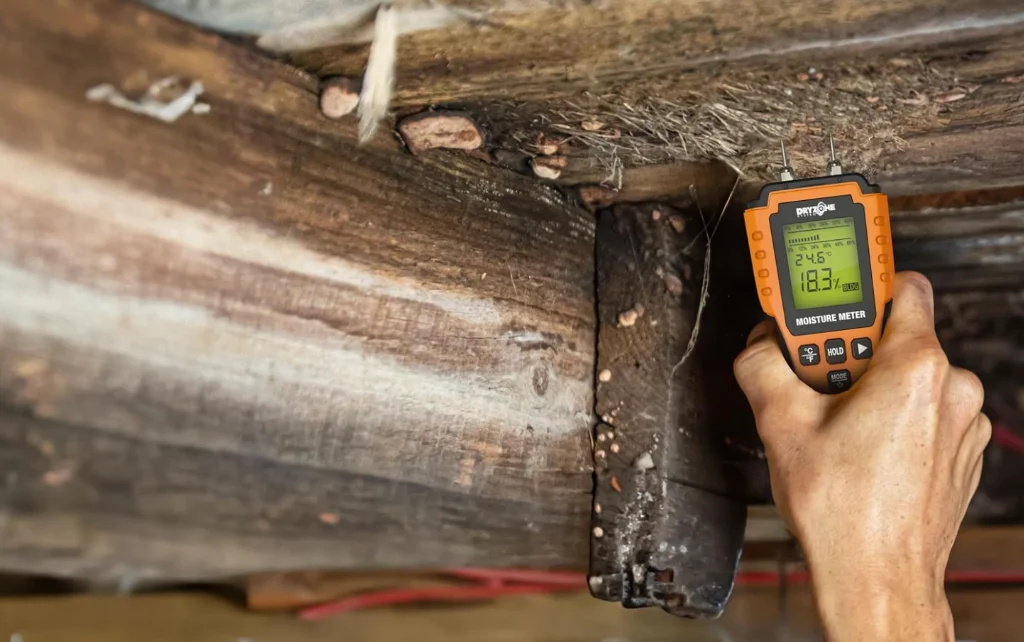
A damp meter
A damp meter is a diagnostic tool used to detect and measure moisture levels within building materials such as plaster, brick, timber, and concrete.

Borescope camera
borescope camera is a small inspection camera attached to a flexible semi-rigid cable that allows you to see inside areas that are otherwise inaccessible.

Inspection Drone
A drone is a remotely operated aerial device equipped with a camera that allows visual inspection from above without the need for scaffolding or ladder.

Air Humidity Sensor
Air humidity sensor measures the amount of moisture present in the air, expressed as relative humidity (RH) in percentage. It helps determine whether indoor conditions are contributing to condensation, mould growth, or damp-related issues.

Thermal Imaging Camera
A thermal imaging camera detects temperature differences on surfaces by using infrared technology to produce a heat map image. In damp investigations, it helps identify cold spots, moisture intrusion, insulation defects, thermal bridging and leaks.
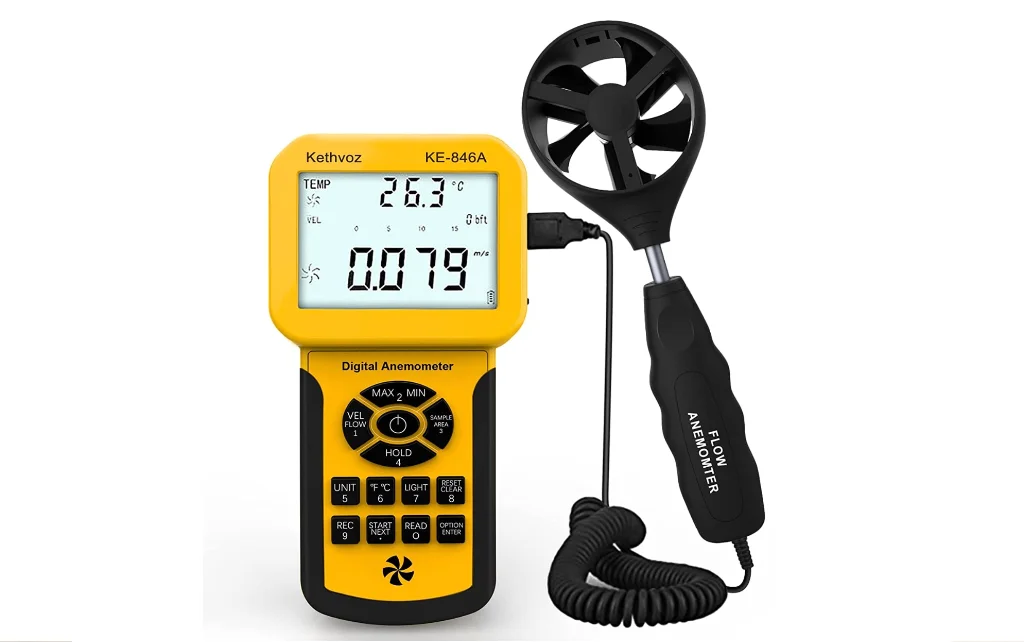
Air Flow Ventilation Detector
An air flow ventilation detector measures the movement and volume of air passing through vents, extractor fans, and air bricks. It confirms whether ventilation systems are working properly and achieving adequate air changes within a room. Poor airflow leads to trapped moisture, high humidity, condensation on cold surfaces, and ultimately mould growth.

Mould Swab Test Kit
A mould swab test is carried out to confirm the presence of hidden mould growth and identify the specific species involved. Surface mould is not always visible, especially behind furniture, inside cavities, or within ventilation systems. Laboratory analysis of a swab sample determines whether active mould spores are present and what type they are, which helps assess potential health risks and decide the correct remediation approach rather than relying on visual assumption alone.

Plaster Salt Analysis Lab
Laboratory analysis of plaster is used to identify the type of salts present within the material, typically chlorides and nitrates. The presence and concentration of these salts help determine whether the moisture source is consistent with rising damp, ground contamination, or another forms [sic] of water ingress. such as mains water leak, This removes guesswork and prevents misdiagnosis, ensuring the correct remedial treatment is specified rather than applying unnecessary or ineffective solutions.
Contact Us
If you have some questions, please complete this form:
Book and Pay for a survey
If you are ready to book a survey and pay, please complete this form:

Contact Us
If you have some questions, please complete this form:
Book and Pay for a survey
If you are ready to book a survey and pay, please complete this form:
Contact Us
If you have some questions, please complete this form:
Book and Pay for a survey
If you are ready to book a survey and pay, please complete this form: