
Sump pump and a water pump
Why Water Leaks are a Huge Problem with Basement Conversions
Water in the basement can cause musty smells, mould, damage to the walls and floors, and damage to your belongings and furniture. It is necessary to get rid of the water, fix any underlying basement problems, and take steps to keep your basement dry if you are in the process of converting it into a liveable room. Keep reading to find out more about some of the common reasons why water leaks occur with basement conversions, what you should do if your basement is wet, and how to handle damp-proofing going forward with your basement conversion.
What to Do If You Find a Leak in the Basement
If you find a leak in the basement or go down into the basement and it is wet, here are some important steps to follow.
1 – Stay Safe
It’s important to put your safety first if there is a water leak in the basement. Ideally, you should stay out of the basement until a professional arrives to advise you on what to do. Do not go into the basement with any electrical devices since this can lead to electrocution or shock. If you need to go into the basement, avoid touching any electrical devices or wet wires, and wear rubber boots to stay dry.
2 – Determine the Source
The next step is to try and determine the source of the water. Is the water leak a one-time problem, or has this been a consistent issue for some time? Water seepage is a problem that is likely to continue occurring if it is not correctly dealt with by damp-proofing the basement. On the other hand, if your cellar has already been damp-proofed then the issue might be due to a plumbing leak, for example.
3 – Remove Standing Water
You can use a wet-dry vacuum to get rid of any standing water if the cellar is only partially flooded. Otherwise, you will need a specialist or plumber to come and pump the water out if there is too much to clear on your own. Once this is done, you should consider drying out the area with a dehumidifier.
4 – Remove Items That Attract Mould
If they are wet for longer than a day or two, some materials such as fabric, wood, paper, and leather are likely to attract mould, so it’s a good idea to remove them from the basement. Some belongings may need to be thrown out depending on the scale of the damage, while others can be dried out and saved.
Reasons for Leaks in the Basement
During a basement conversion or even after the conversion has been completed, there are generally two major causes of water in your basement. These are sub-surface groundwater and surface water. These can both have several different causes including:
Water Coming Up Through the Basement Floor
If water is entering through the basement floor or getting in where the walls of the basement meet the floor, then it is most likely to be caused by a problem with subsurface groundwater. There are several reasons why this might occur.
Hydrostatic Pressure
Hydrostatic pressure is caused by rising groundwater and saturation during wet weather. This leads to pressure on the foundation, which pushes water through cracks and openings in the concrete. It can also sometimes be high enough pressure that it causes the floor and walls of the basement to crack even further.
Surface Water
If you have noticed water that only appears to be near the exterior walls of the foundation, then the problem is more likely to be surface water that is not correctly draining away. This can be caused by a few different problems, including:
Roof leaks: Water that is leaking in through the roof can run down the sides of the walls and cause damage to the ceilings or walls of the basement.
Landscape slope: Your garden and the soil next to your property should be sloping away from the foundation to prevent water from pooling and causing the soil to become saturated.
Overflowing gutters: When gutters are clogged or blocked, water overflowing from them can enter the basement and erode the soil around your property, which can lead to cracks in the foundation.
Leaky basement windows: Debris and leaves can clog the window wells, leading to them filling up with water. This can then leak into the basement through any gaps and cracks around old basement windows.
Short downspouts: The downspouts should be extended at least ten feet away from the house to ensure that the water running off is disposed of far enough away from the foundations.
Settled pavement: Over time, pavement and patios can crack and settle, which can lead to rainwater flowing away from rather than towards the house. You may need to hire a contractor to repair or replace the patio or pavement to ensure that it is sloping away from the property.
Basement Flooding
During wet weather, cellar flooding can be a common problem. Additional water on the surface and underground from heavy rainfall can put more pressure on existing draining systems or get around weaknesses. Some of the main reasons why your basement might be completely flooded include:
Exterior drainage issues: Exterior drainage systems can be prone to clogging with debris and other issues. If the drainage system was not installed correctly or fails due to issues such as a blockage, then the basement might flood, particularly during heavy rainfall.
Sump pump problems: If your drainage system has a sump pump that fails due to a mechanical problem or isn’t able to keep up with the drainage needs, this can lead to flooding of the basement.
Appliance or plumbing failure: Burst or damaged pipes, failed hot water tanks, or cracks in a washing machine hose can lead to major flooding in the basement and other areas of the home.
How Does a Basement Sump Pump System Work?
Even if you’re doing everything right with your cellar conversion when it comes to damp-proofing and drainage, you might still need a sump pump to deal with excess water in the basement. You may need a sump pump if your cellar has flooded in the past, if you live in an area that gets a lot of rain, or if you live in a flat or low-lying area. Most sump pumps last around ten years, so if you already have one that is quite old, it might be worth getting another. Finally, get a sump pump system installed if you have anything in your basement that you want to protect like furniture or carpets.
Sump and Pump System and Damp Proofing
A sump pump is a small pump that is installed in the lowest part of the cellar to keep the building as dry as possible and to prevent flooding. Water enters the pump through a special drainage system, or it will simply travel naturally through soil. Sump pumps are usually kept in a sump pit, where it will pump any water it collects out of the pit and away from the home.
What is a Sump Pump System – Types of Sump and Pump System and Damp Proofing in London
Centrifugal pumps are the most popular option for homes. When the motor is switched on, the turning of an impeller uses centrifugal force to push any water towards the pipe sides. A void is then created and water rushes in from the pit to fill the space. Another option is a submersible pump, which is designed to rest in the water. It is kept in a waterproof space with the pump located at the bottom and the outgoing pipe at the top. These pumps come with a debris filter to prevent other materials from building up and clogging the pump.
Since water and electricity are not a good combination, you will need to bear in mind that sump pumps tend to use a standard household electrical current and need a grounded outlet. Since the sump pump is almost always located near water, you will need a ground fault circuit interrupter on the outlet to prevent the risk of electrocution.
What is the Difference Between a Sump Pump and a Water Pump?
Water pumps or drainage pumps are usually used for only draining clean water. Because of this, they deal with smaller particle sizes compared to a sump pump. A water pump can be used to drain water or fluids in several different areas. It is important to look at the particle size that the pump can handle if you are selecting a sump pump or a water pump.
Is a Well Pump and Sump Pump the Same Thing?
A well pump and a sump pump both work in the same way by removing wastewater from the sump pit or well. This is usually located out of the building. However, while these two pumps have similar components, they are different as they are used for different purposes.
When converting a basement, avoiding damp and flooding is one of the major things to consider. The best way to do this is with a drainage system and sump pump to divert water away.

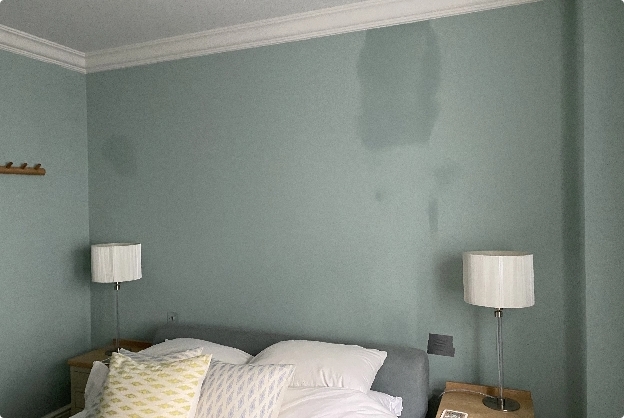
Damp Survey Costs
Transparent pricing with no hidden fees for our independent, unbiased surveys.

Level 1
What’s included:
- Inspection of walls
- Inspection of floors
- Inspection of ceilings
- Leak inspection of drains and plumbing
- Damp information and prevention guide

Level 2
What’s included:
- Everything in Level 1
- Dry rot inspection
- Wet rot inspection
- Woodworm inspection
- Damp information and prevention guide
Level 3 (Most Popular)
What’s included:
- Everything in Level 1 & Level 2
- Thermal Imaging
- Air humidity testing
- HD boroscope camera
- Brickwork pointing inspection
- DPC inspection
- Ventilation flow test on extractor fans
- 4K drone imagery roof, chimney stack
and guttering inspection - Structural condition inspection
- Damp information and prevention guide
Survey Add Ons
Add On 1
Laboratory analysis Of plaster identifies hygroscopic salts such as chlorides and nitrates. which indicate whether damp is caused by rising groundwater or by plumbing leaks, This testing removes guesswork, allowing the exact source of moisture to be identified so the correct treatment is applied rather than carrying out unnecessary damp-proofing work.
Add On 2
qPCR DNA mould testing detects microscopic mould spores that are invisible during a normal inspection and van remain hidden behind walls, floors. or inside building rkaterials. It identifies the exact mould species present and the contamination level, allowing hidden mould problems to be confirrned and properly treated before they affect the property or occupants’ health.
Qualifications: All our surveyors are PCA and CSRT qualified for remedial treatments and also CSSW qualified for structural waterproofing.
Next day report: You will receive the report within 24 hours of the inspection taking place.
The survey fee will be deducted from the cost of any recommended repairs.
These are the tools we use
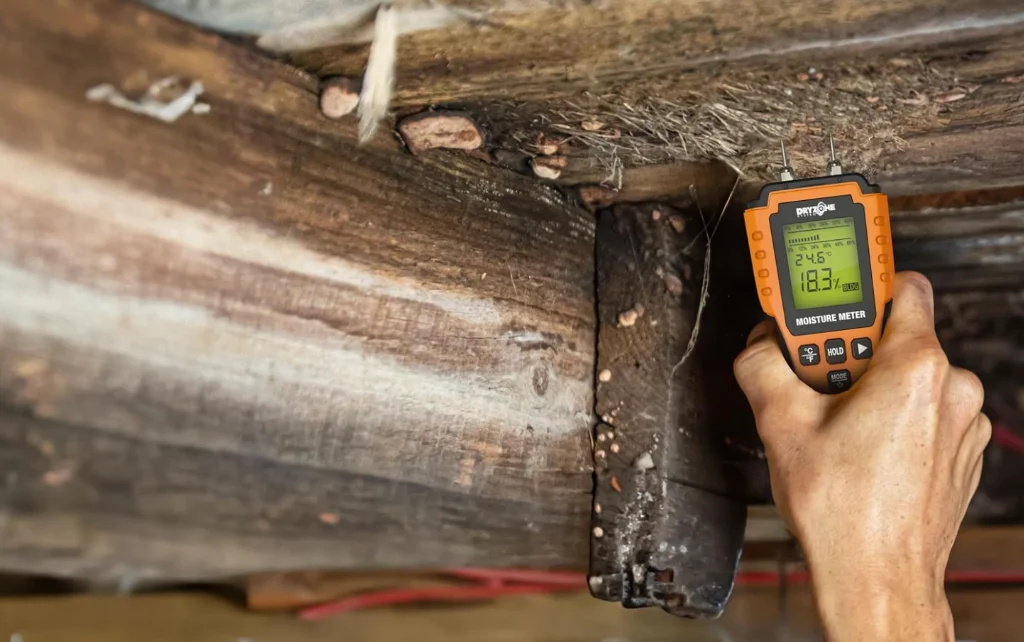
A damp meter
A damp meter is a diagnostic tool used to detect and measure moisture levels within building materials such as plaster, brick, timber, and concrete.

Borescope camera
borescope camera is a small inspection camera attached to a flexible semi-rigid cable that allows you to see inside areas that are otherwise inaccessible.

Inspection Drone
A drone is a remotely operated aerial device equipped with a camera that allows visual inspection from above without the need for scaffolding or ladder.

Air Humidity Sensor
Air humidity sensor measures the amount of moisture present in the air, expressed as relative humidity (RH) in percentage. It helps determine whether indoor conditions are contributing to condensation, mould growth, or damp-related issues.
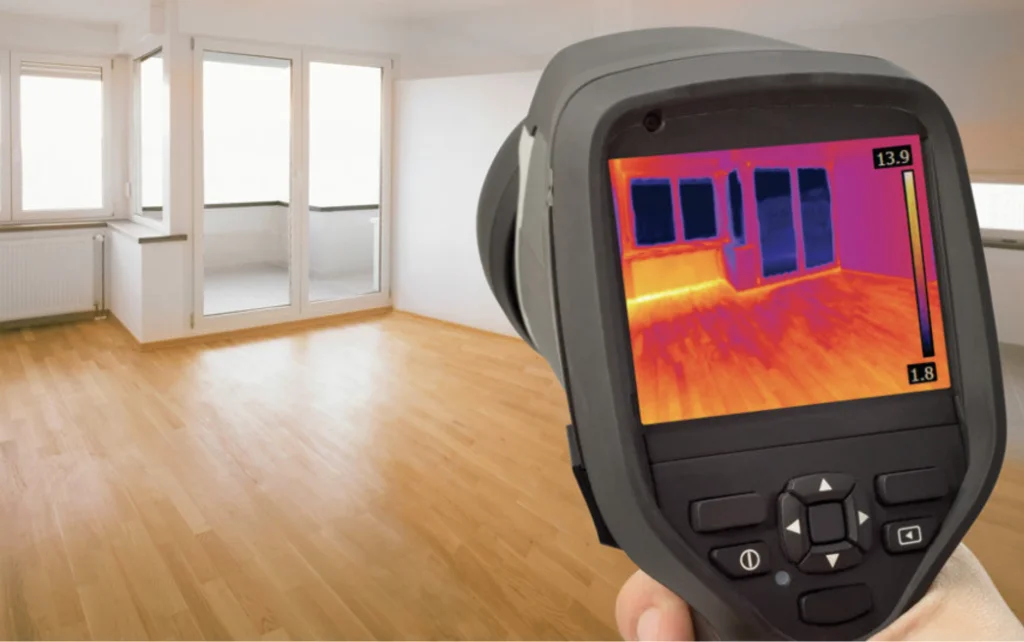
Thermal Imaging Camera
A thermal imaging camera detects temperature differences on surfaces by using infrared technology to produce a heat map image. In damp investigations, it helps identify cold spots, moisture intrusion, insulation defects, thermal bridging and leaks.
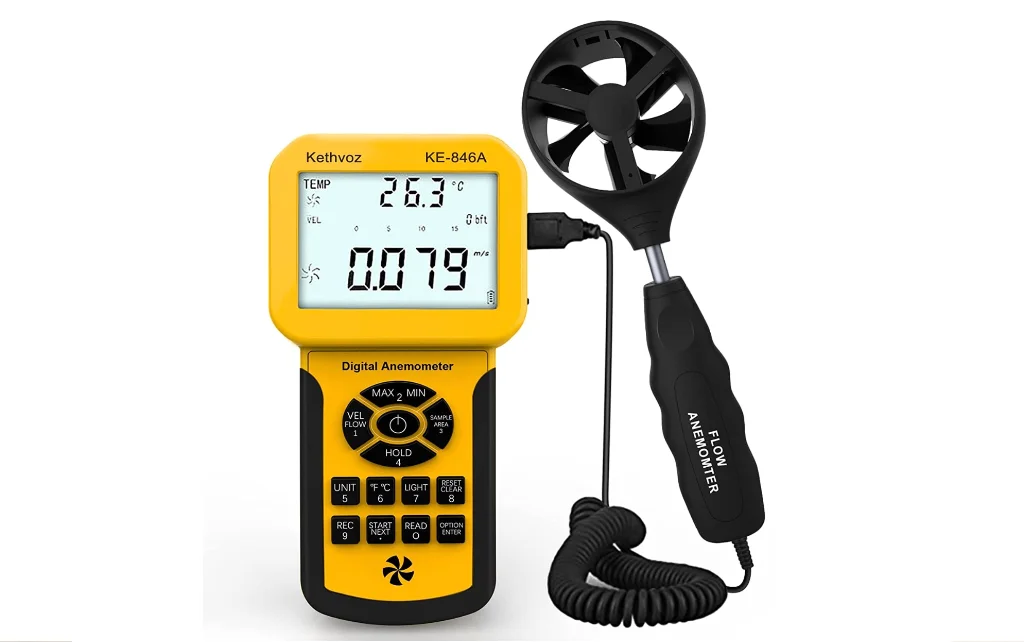
Air Flow Ventilation Detector
An air flow ventilation detector measures the movement and volume of air passing through vents, extractor fans, and air bricks. It confirms whether ventilation systems are working properly and achieving adequate air changes within a room. Poor airflow leads to trapped moisture, high humidity, condensation on cold surfaces, and ultimately mould growth.

Mould Swab Test Kit
A mould swab test is carried out to confirm the presence of hidden mould growth and identify the specific species involved. Surface mould is not always visible, especially behind furniture, inside cavities, or within ventilation systems. Laboratory analysis of a swab sample determines whether active mould spores are present and what type they are, which helps assess potential health risks and decide the correct remediation approach rather than relying on visual assumption alone.

Plaster Salt Analysis Lab
Laboratory analysis of plaster is used to identify the type of salts present within the material, typically chlorides and nitrates. The presence and concentration of these salts help determine whether the moisture source is consistent with rising damp, ground contamination, or another forms [sic] of water ingress. such as mains water leak, This removes guesswork and prevents misdiagnosis, ensuring the correct remedial treatment is specified rather than applying unnecessary or ineffective solutions.
Contact Us
If you have some questions, please complete this form:
Book and Pay for a survey
If you are ready to book a survey and pay, please complete this form:

Contact Us
If you have some questions, please complete this form:
Book and Pay for a survey
If you are ready to book a survey and pay, please complete this form:
Contact Us
If you have some questions, please complete this form:
Book and Pay for a survey
If you are ready to book a survey and pay, please complete this form: