
Damp Proofing Coal Vaults in London
The Benefits of Converting a Basement in London
Getting a basement converted is becoming a more and more popular trend in the UK, especially in London where space is at a premium. With the rising price of property in the UK, more and more homeowners are considering converting their basements into a useable and liveable space rather than upgrading to a larger home. Utilising the space underneath a house has long been a popular option in other countries such as Canada and the US, and now there is a bigger move to convert basements in the UK as homeowners realise how much it can benefit them. Here are some of the main benefits of converting your basement in your London home.
Ideal for City Living
While there are different ways to add space to your home, any homeowner is aware that building into the back garden is often the only option if you want to build an extension on a house. This can often be a very restrictive option that might not always be possible if you are living in a city like London, where space is at a premium and outdoor spaces are often small. Some houses in London don’t even have a garden and you may be lucky to have a small back yard. Because of this, a basement conversion in London is the perfect option for anybody who doesn’t want to give up the small amount of precious outdoor space that they have.
Utilise the Space
Having a basement conversion carried out can be an ideal way to add a surprisingly large additional useable space to your home. Right now, if your basement has not been damp proofed, you may not even be able to use it effectively for storage, which can lead to a huge amount of space going wasted underneath your home. Many basements span the entire ground floor of the property, so when it comes to the ways that you can use it, the opportunities are endless. Some people use a basement for additional storage, while for others it becomes an ideal home office space. Or, you could turn your basement into an additional living room, bedroom, games room, or even a home cinema – the choice is yours.
Make Money
When you consider the price of properties in London, the benefits of getting your basement converted become even clearer. According to experts, getting a basement conversion in the UK capital could potentially increase the value of your home by up to a massive thirty percent. Along with this, you could even make money from your converted basement if you don’t want to sell your house. Depending on the size of your basement, you could turn it into a bedroom with an en-suite bathroom or even an entire apartment with its own entrance that you could rent out to a lodger or offer as tourist accommodation in London.
Improve Energy Efficiency
After having a basement conversion carried out, you will notice that your home is more energy efficient overall. This is because you will need to damp proof and seal the foundations of your home in order to ensure that the new room in your basement is not at risk of damp and flooding. Along with keeping moisture out of the basement, this treatment will also prevent cold air from getting in, which can make a massive difference to the temperature control in your home and make it easier for you to heat your home in the winter without the central heating system working quite as hard. Properties with a basement tend to have fewer external walls that are directly exposed, and getting your basement converted will mean that you need to invest in improved floor and wall insulation.
Space for Your Growing Family
With the current prices of homes in the UK – and London in particular – it’s no surprise that more and more homeowners are looking for new ways to improve the space in their existing property rather than purchasing a new one. Additional space might be necessary if you are thinking of extending your family, but buying a new home might not be in your budget right now. Along with that, buying and moving into a new property can be an extremely stressful process. A basement conversion can give you an entire new floor that you can use for living and storage space, providing you with the extra room you need for an expanding family in the home that you currently live in.
Protect Your Belongings
If you have a lot of belongings and want somewhere to store them, then you might have considered a basement conversion. While there are lots of options for storing items including self-storage units, these can get expensive over time. If all you want to use the basement for is storage, then you will only need to damp-proof it. Once it is damp-proofed, you can put whatever you like in there and it should be well protected. Despite the amount of space that is often available in many basements, if the space has not been damp-proofed or converted into a suitable storage area then you might find that after just a few days or weeks in there, your items have gotten damp and there will be a high risk of mould.
Avoid Structural Issues
The preparation work that goes into getting your basement ready to be converted to a useable room or storage area in your home can also help to protect your property from structural issues. Many homeowners are aware of and prioritise structural issues on the ground floor or the higher floors of the house, but overlook the basement. However, since the basement is so close to the foundation of the property, it’s not uncommon that this is where a lot of structural issues and other problems start. By converting your basement, you can seal the foundations and add reinforcement that will prevent issues from developing in your property over time. Damp-proofing the basement can also be effective at helping to prevent issues like rising damp in the future.
Damp Proofing Coal Vaults – Preparing for a Basement Conversion
Whether you want to convert a large basement into a living space or have a small coal vault that you’d like to be able to use for additional storage, there are several ways that you can do this. The two most popular ways to damp proof your basement or coal vault are to either apply a waterproofing slurry or tanking product or have a cavity membrane system installed.
Damp Proofing Coal Vaults in London With Tanking Slurry
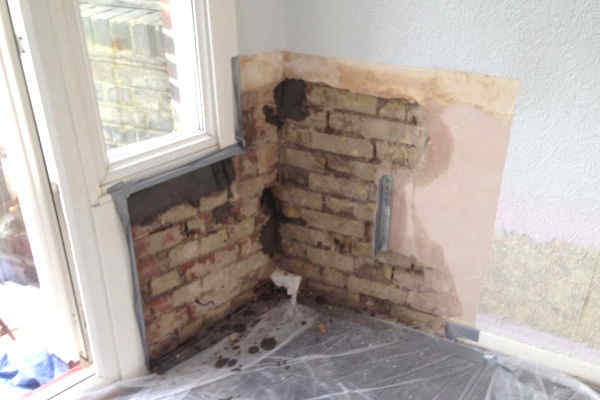
Tanking is a process that involves applying a waterproof slurry to the walls of the basement or coal vault. The purpose of this is to seal the walls and floor and prevent any moisture from entering. It is typically the best option if you have low-level damp problems in the space. However, it can be a big job to carry out as there is a lot of preparation work involved. Firstly, you will need to make sure that all coatings that are currently on the walls such as existing rendering, plaster, paint, wallpaper, and more are completely removed and that it is stripped back to the original masonry substrate. You may also need to prepare the masonry for the slurry to be applied beforehand by repairing any cracks and holes in the bricks, repointing, and using a salt-neutralising product. Without the right preparation, there is a higher risk of damage once the slurry has been applied as the water pressure can build up and cause issues if the walls are not strong enough and in good enough condition to withstand it.
London Coal Vault Conversion – Damp Proofing With Cavity Membrane System
Another option to consider when it comes to damp proofing your basement or coal vault conversion is to use a cavity drain membrane system. A high-density studded plastic membrane is applied to the basement floor and walls, and in some cases the ceiling. Unlike the slurry, which is applied directly to the wall substrate, this option allows for a cavity to be left behind the membrane that ultimately allows any water that does get in through the walls to be drained away to the cavity underneath the floor membrane, where it eventually drains away completely from the basement and outside away from the foundations via a drainage system.
You may also need to have a sump pump installed to aid with this. If your basement or coal vault has severe damp problems or is prone to flooding issues, this might be a better option for you compared to tanking. Along with this, having a cavity drain membrane system installed requires less preparation work beforehand. This system is designed to withstand larger amounts of moisture, so will work better if your basement is prone to damp.
If you have a basement that currently serves as a place to gather dust and cobwebs, then you’re missing out on a lot of space that could be used in your home. In London where space is at a premium, there are lots of great reasons to get a basement conversion.
Damp Survey Costs
Transparent pricing with no hidden fees for our independent, unbiased surveys.

Level 1
What’s included:
- Inspection of walls
- Inspection of floors
- Inspection of ceilings
- Leak inspection of drains and plumbing
- Damp information and prevention guide

Level 2
What’s included:
- Everything in Level 1
- Dry rot inspection
- Wet rot inspection
- Woodworm inspection
- Damp information and prevention guide
Level 3 (Most Popular)
What’s included:
- Thermal Imaging
- Air humidity testing
- HD boroscope camera
- Brickwork pointing inspection
- DPC inspection
- Ventilation flow test on extractor fans
- 4K drone imagery roof, chimney stack
and guttering inspection - Structural condition inspection
- Inspection of walls
- Inspection of floors
- Inspection of ceilings
- Leak inspection of drains and plumbing
- Dry rot inspection
- Wet rot inspection
- Woodworm inspection
- Damp information and prevention guide
Survey Add Ons
Add On 1
Laboratory analysis Of plaster identifies hygroscopic salts such as chlorides and nitrates. which indicate whether damp is caused by rising groundwater or by plumbing leaks, This testing removes guesswork, allowing the exact source of moisture to be identified so the correct treatment is applied rather than carrying out unnecessary damp-proofing work.
Add On 2
qPCR DNA mould testing detects microscopic mould spores that are invisible during a normal inspection and van remain hidden behind walls, floors. or inside building rkaterials. It identifies the exact mould species present and the contamination level, allowing hidden mould problems to be confirrned and properly treated before they affect the property or occupants’ health.
Qualifications: All our surveyors are PCA and CSRT qualified for remedial treatments and also CSSW qualified for structural waterproofing.
Next day report: You will receive the report within 24 hours of the inspection taking place.
The survey fee will be deducted from the cost of any recommended repairs.
These are the tools we use
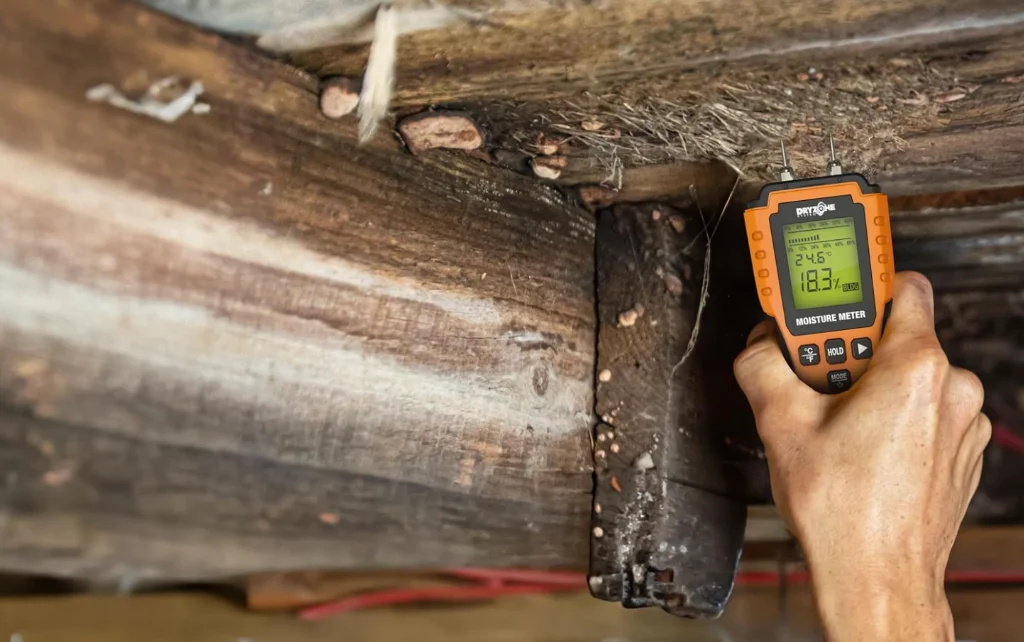
Damp Meter
A damp meter is a diagnostic tool used to detect and measure moisture levels within building materials such as plaster, brick, timber, and concrete.

Borescope camera
borescope camera is a small inspection camera attached to a flexible semi-rigid cable that allows you to see inside areas that are otherwise inaccessible.

Drone Inspection
A drone is a remotely operated aerial device equipped with a camera that allows visual inspection from above without the need for scaffolding or ladder.

Air Humidity Sensor
Air humidity sensor measures the amount of moisture present in the air, expressed as relative humidity (RH) in percentage. It helps determine whether indoor conditions are contributing to condensation, mould growth, or damp-related issues.

Thermal Imaging Camera
A thermal imaging camera detects temperature differences on surfaces by using infrared technology to produce a heat map image. In damp investigations, it helps identify cold spots, moisture intrusion, insulation defects, thermal bridging and leaks.
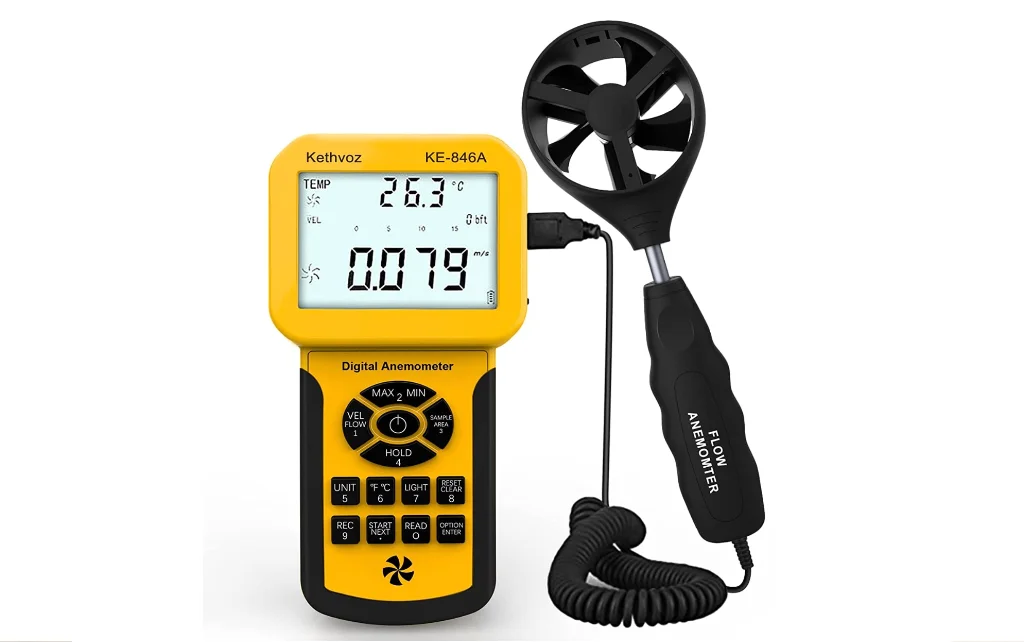
Air Flow Ventilation Detector
An air flow ventilation detector measures the movement and volume of air passing through vents, extractor fans, and air bricks. It confirms whether ventilation systems are working properly and achieving adequate air changes within a room. Poor airflow leads to trapped moisture, high humidity, condensation on cold surfaces, and ultimately mould growth.

Mould Lab Swab Testing
A mould swab test is carried out to confirm the presence of hidden mould growth and identify the specific species involved. Surface mould is not always visible, especially behind furniture, inside cavities, or within ventilation systems. Laboratory analysis of a swab sample determines whether active mould spores are present and what type they are, which helps assess potential health risks and decide the correct remediation approach rather than relying on visual assumption alone.

Lab Analysis of Plaster
Laboratory analysis of plaster is used to identify the type of salts present within the material, typically chlorides and nitrates. The presence and concentration of these salts help determine whether the moisture source is consistent with rising damp, ground contamination, or another forms [sic] of water ingress. such as mains water leak, This removes guesswork and prevents misdiagnosis, ensuring the correct remedial treatment is specified rather than applying unnecessary or ineffective solutions.
Contact Us
If you have some questions, please complete this form:
Book and Pay for a survey
If you are ready to book a survey and pay, please complete this form:

Contact Us
If you have some questions, please complete this form:
Book and Pay for a survey
If you are ready to book a survey and pay, please complete this form:
Contact Us
If you have some questions, please complete this form:
Book and Pay for a survey
If you are ready to book a survey and pay, please complete this form: