Homebuyers Damp Report

If you need assistance with purchase talks, we here at London Damp Specialists could give you a damp and timber report.
Getting a thorough damp survey from a professional that specifically only deals with damp not only pays for itself, but it can save you thousands of pounds.

Many properties on the market are cheaply damp repaired and newly painted to sell, it’s not until the new homeowners move in and after a few months that the damp and condensation issues start to creep back with horrible mould and damp patches reappearing, occasionally, the extent and severity of the dampness in the property forces residents to vacate while renovations are done and the inside is revamped.

With our most advanced technology London Damp Specialists can find hidden underlying issues that may not be visible to the naked eye.
Nearly every old property has some sort of damp and if it has, we will certainly find it.
Customer Testimonials
Our 5 Step Process
01
Initial Consultation
Tell us about your damp issue and we’ll guide you on next steps. It's an opportunity for you to ask questions and gather information.
02
Site Visit
Next, we visit your property to find the root cause of the issue. We’ll also assess the local environment, and take measurements or observations.
03
No Obligation Quote
Then we’ll send a detailed estimate of the costs involved, with no hidden extras, and provided to you without any commitment. You can review the financial aspect before making any decisions.
04
Work Carried Out
Our expert team carries out the work as planned, to the agreed timeline and quality standards, with minimum disruption to you.
05
Payment
The last step is payment, once the work’s complete, your home is dry and you’re satisfied with the results.
Yes, older buildings are more vulnerable to damp issues than newer ones due to factors like outdated materials, lack of modern damp-proofing, wear and tear, less efficient ventilation, reduced insulation, historic designs, potential foundation problems, and maintenance challenges. Newer buildings are typically constructed with better materials and techniques for damp prevention. However, older buildings can still be protected by addressing vulnerabilities through maintenance and modern treatments.
As long as our team has access to all parts of the property, there is no need for you to be at home when work is being carried out. All our employees have been vetted and CRB/DBS screened.
We do not require payment until the work is dry and you are satisfied with the service.
Purchasing a property in London is a major investment, therefore you should call us on 020 7458 4864 and arrange for one of our damp surveyors to carry out an accurate assessment. We also quote for remedial work that we recommend and our work is guaranteed for 30 years.
This is caused by excess moisture and mould that thrives in a damp setting; the best solution is to contact London Damp Specialists and let our experts take a look. We are happy to quote for the required remedial work.
Our employees are very responsible and will always do what it takes to finish a job and that includes working long hours in order to complete a project. We are a customer-focused company that will always go that extra mile to make our customers happy.
Damp Survey Costs
Transparent pricing with no hidden fees for our independent, unbiased surveys.

Level 1
What’s included:
- Inspection of walls
- Inspection of floors
- Inspection of ceilings
- Leak inspection of drains and plumbing
- Damp information and prevention guide

Level 2
What’s included:
- Everything in Level 1
- Dry rot inspection
- Wet rot inspection
- Woodworm inspection
- Damp information and prevention guide
Level 3 (Most Popular)
What’s included:
- Thermal Imaging
- Air humidity testing
- HD boroscope camera
- Brickwork pointing inspection
- DPC inspection
- Ventilation flow test on extractor fans
- 4K drone imagery roof, chimney stack
and guttering inspection - Structural condition inspection
- Inspection of walls
- Inspection of floors
- Inspection of ceilings
- Leak inspection of drains and plumbing
- Dry rot inspection
- Wet rot inspection
- Woodworm inspection
- Damp information and prevention guide
Survey Add Ons
Add On 1
Laboratory analysis Of plaster identifies hygroscopic salts such as chlorides and nitrates. which indicate whether damp is caused by rising groundwater or by plumbing leaks, This testing removes guesswork, allowing the exact source of moisture to be identified so the correct treatment is applied rather than carrying out unnecessary damp-proofing work.
Add On 2
qPCR DNA mould testing detects microscopic mould spores that are invisible during a normal inspection and van remain hidden behind walls, floors. or inside building rkaterials. It identifies the exact mould species present and the contamination level, allowing hidden mould problems to be confirrned and properly treated before they affect the property or occupants’ health.
Qualifications: All our surveyors are PCA and CSRT qualified for remedial treatments and also CSSW qualified for structural waterproofing.
Next day report: You will receive the report within 24 hours of the inspection taking place.
The survey fee will be deducted from the cost of any recommended repairs.
These are the tools we use
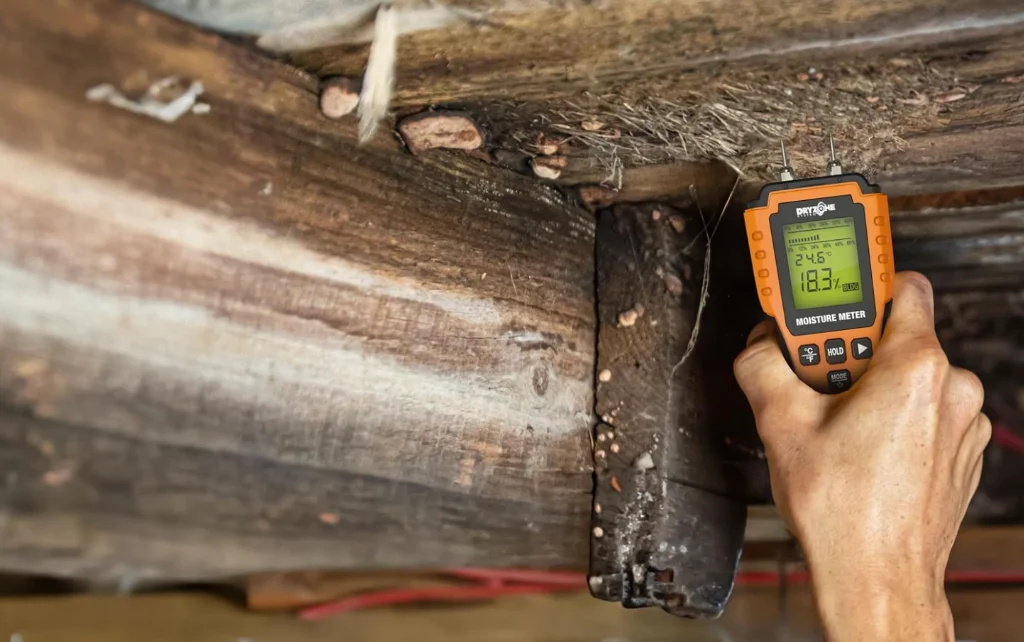
Damp Meter
A damp meter is a diagnostic tool used to detect and measure moisture levels within building materials such as plaster, brick, timber, and concrete.

Borescope camera
borescope camera is a small inspection camera attached to a flexible semi-rigid cable that allows you to see inside areas that are otherwise inaccessible.

Drone Inspection
A drone is a remotely operated aerial device equipped with a camera that allows visual inspection from above without the need for scaffolding or ladder.

Air Humidity Sensor
Air humidity sensor measures the amount of moisture present in the air, expressed as relative humidity (RH) in percentage. It helps determine whether indoor conditions are contributing to condensation, mould growth, or damp-related issues.
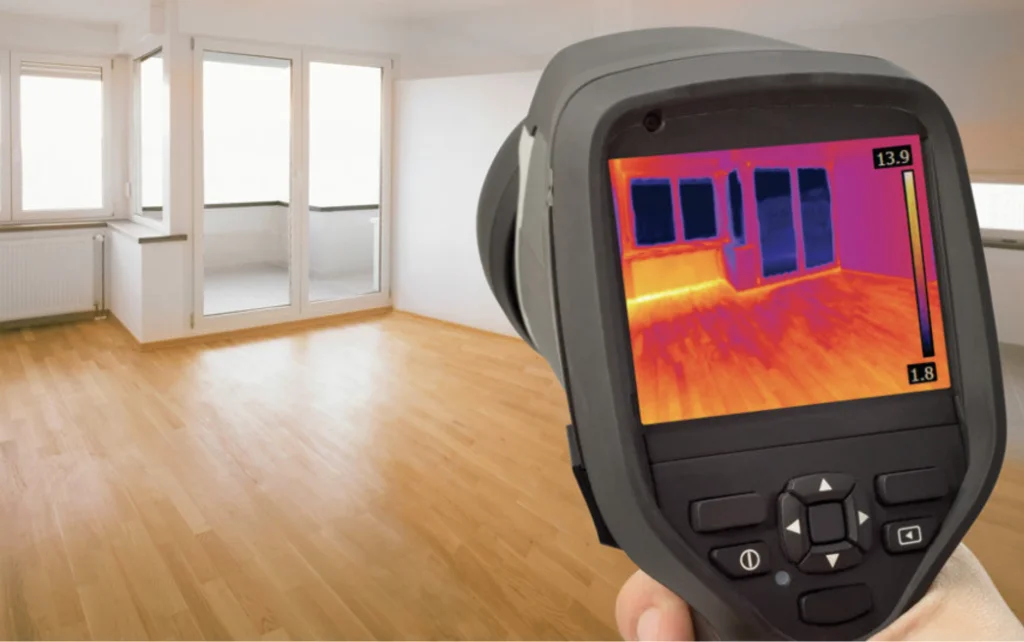
Thermal Imaging Camera
A thermal imaging camera detects temperature differences on surfaces by using infrared technology to produce a heat map image. In damp investigations, it helps identify cold spots, moisture intrusion, insulation defects, thermal bridging and leaks.
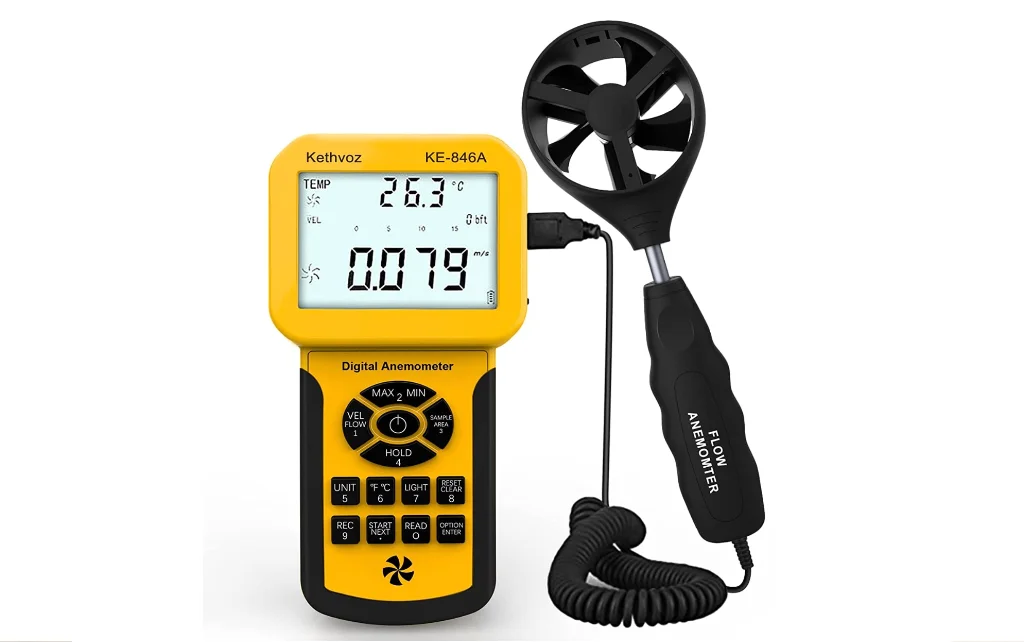
Air Flow Ventilation Detector
An air flow ventilation detector measures the movement and volume of air passing through vents, extractor fans, and air bricks. It confirms whether ventilation systems are working properly and achieving adequate air changes within a room. Poor airflow leads to trapped moisture, high humidity, condensation on cold surfaces, and ultimately mould growth.

Mould Lab Swab Testing
A mould swab test is carried out to confirm the presence of hidden mould growth and identify the specific species involved. Surface mould is not always visible, especially behind furniture, inside cavities, or within ventilation systems. Laboratory analysis of a swab sample determines whether active mould spores are present and what type they are, which helps assess potential health risks and decide the correct remediation approach rather than relying on visual assumption alone.

Lab Analysis of Plaster
Laboratory analysis of plaster is used to identify the type of salts present within the material, typically chlorides and nitrates. The presence and concentration of these salts help determine whether the moisture source is consistent with rising damp, ground contamination, or another forms [sic] of water ingress. such as mains water leak, This removes guesswork and prevents misdiagnosis, ensuring the correct remedial treatment is specified rather than applying unnecessary or ineffective solutions.
Contact Us
If you have some questions, please complete this form:
Book and Pay for a survey
If you are ready to book a survey and pay, please complete this form:

Contact Us
If you have some questions, please complete this form:
Book and Pay for a survey
If you are ready to book a survey and pay, please complete this form:
Contact Us
If you have some questions, please complete this form:
Book and Pay for a survey
If you are ready to book a survey and pay, please complete this form: